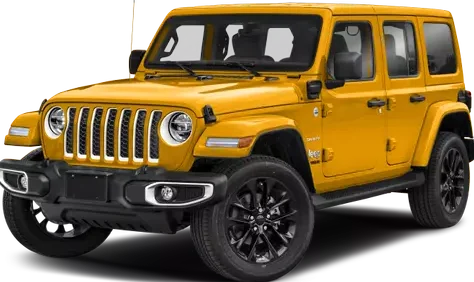
Type “used engines for sale” into a search bar and you’ll get flooded with the same handful of results every time: parts brokers with a phone number and no photos, salvage yard directories where half the listings are dead links, and marketplace sellers asking you to trust a mileage number with nothing to back it up. Nobody in that pile lets you hear the thing run before you pay for it. That’s the gap we’re filling, except our version looks a little different from the usual listing, because we don’t sell bare engines pulled off a shelf. We sell the whole vehicle the engine came out of.
We’re Striker Cars. Our inventory is made up of striker cars, which is our word for vehicles sold on a bill of sale instead of a title. No DMV paperwork bundled into the deal, no dealership markup, just the car itself at a price that reflects what it actually is. And for a huge share of our buyers, what it actually is comes down to one thing: the engine.
Why People Searching “Used Engines for Sale” End Up Buying a Whole Car
Here’s the math nobody explains up front. A verified, low-mileage engine pulled and crated from a dismantler often costs more than an entire running vehicle sold without a title. That sounds backwards until you think about what you’re actually paying for in each case. A crated engine from a parts broker comes with labor costs for the pull, storage fees, a markup for “tested and verified” (which sometimes means someone spun it by hand, not that it ran under load), and shipping for a heavy, awkward, single component that still needs a pallet and a freight quote of its own.
A striker car comes with that same engine, still mounted in its factory cradle, still connected to its original wiring harness, still bolted to the transmission it was matched to at the factory. You get the ECU, the sensors, the accessory brackets, the exhaust manifolds, all the small parts that cost real money individually and that people forget to budget for when they’re pricing out “just the engine.” We’re not marking any of that up separately. It’s already there, because it never left the car.
What “Used Engines for Sale” Actually Means When You Buy From Us
When we list a striker car, we’re not hiding the fact that a lot of buyers only care about what’s under the hood. We lean into it. Every listing gets an honest writeup of the engine’s condition: mileage where we can verify it, any known issues, whether it starts cold without hesitation, whether there’s a knock, a tick, a leak, anything a buyer would want to know before committing money.
We test what we reasonably can before a car goes up for sale. That usually means a cold start on video, a listen for anything abnormal at idle and under light load, and a visual check for leaks around the pan, valve covers, and timing cover. We’re not a dyno shop and we don’t pretend to be, but we’ve been doing this long enough to know what a healthy engine sounds and looks like, and we tell buyers exactly what we find, good or bad. If a motor has a documented issue, we say so and we price the vehicle accordingly instead of hoping nobody asks.
The Platforms We See Most in Our Inventory
Ask what shows up most and it’s usually the platforms people actually search for when they’re hunting used engines for sale: GM’s LS-series V8s out of Camaros, Silverados, and Tahoes, Chrysler’s Hemi 5.7 and 6.4 blocks out of Chargers and Challengers, Ford’s Coyote 5.0 out of Mustangs, BMW’s N54 and N55 turbocharged sixes, and AMG’s twin-turbo V8 platforms that are genuinely expensive to source any other way. These aren’t tired, high-mile units somebody’s desperate to unload. Most came out of insurance write-offs after collision damage that had nothing to do with the drivetrain, or from owners who needed fast cash and didn’t want to bother with a title transfer.
The body damage on a striker car and the health of its engine are usually two completely separate stories, and that’s exactly the disconnect that makes this whole market work. A car can be totaled on paper and still have a motor with single-digit thousands of miles on it, running exactly the way it did the day it left the factory.
Buying a Car for the Engine: How It Actually Works
The process is straightforward, and we keep it that way on purpose.
You tell us what engine platform or vehicle you’re after, and whether you need it local or you’re fine with shipping. We check what’s actually in stock, because we’re not going to string you along about a car we don’t have.
We send real photos and a start-up video on request. Not a stock photo pulled from a manufacturer press kit, an actual photo of the actual unit you’d be buying, engine bay included.
Once you’re satisfied, we agree on a price and take payment, cash or wire. No financing, no credit application, no waiting on a bank to decide you’re worthy of a good engine.
Then it’s pickup or shipping. Local buyers often handle their own transport or hire a hauler. Buyers further out, including international buyers, work with a freight forwarder, and we can walk you through that if it’s your first time importing a vehicle.
Once it lands, what you do with the rest of the car is up to you. Pull the engine and part out the shell, keep the whole thing running as a project car, or export it and let the next owner decide. We’ve sold to backyard mechanics doing their first engine swap and to shops that buy three or four vehicles a month specifically to harvest matched drivetrains.
Used Engines for Sale Versus a Whole Striker Car: A Real Comparison
Say you need a Hemi 6.4 for a rebuild. Sourced loose from a parts broker, you’re looking at a price that assumes someone already did the labor of pulling it, testing it under conditions you can’t verify, and crating it for freight. You’ll likely still need to source a matching harness and ECU separately, because a lot of loose-engine listings don’t include the electronics, and mismatched electronics on a modern engine can turn a straightforward swap into a wiring nightmare.
Buy the whole striker car instead and you get the Hemi still sitting in the engine bay, wired the way it left the factory, bolted to a transmission that was calibrated to work with it. You pull it yourself, or have a shop do it, and you know exactly what you’re getting because you can see the whole vehicle before you commit. Once the engine’s out, the rest of the car, the doors, the seats, the wheels, the interior trim, still has resale value as parts, which chips away at your total cost even further. Buyers doing this math for the second or third time almost always land on the same conclusion: the whole car wins.
What a Striker Car Is Not
We want to be clear about this because we’d rather set expectations correctly than have a confused customer later. A striker car is not a title car for sale with a document trail, a lien history report, and a state-issued certificate. It’s not something a bank will finance, and it’s not something you should assume you can register and plate without doing homework first, because that depends entirely on your state or country’s specific rules. What it is: a real vehicle, sold honestly, with a bill of sale and whatever supporting documentation we actually have, priced around the value of what’s mechanically sound rather than what’s on file with a government office.
If your plan involves pulling the engine for a swap, parting the car out, rebuilding it for track use, or exporting it somewhere the title requirements are different, a lot of the usual title headaches simply don’t apply to your situation in the first place. If you want the fuller rundown of how a purchase actually goes from first contact to keys in hand, we cover that in Buy Striker Cars.
Shipping Used Engines for Sale Worldwide
Because we sell whole vehicles rather than loose components, shipping actually gets easier, not harder. A crated bare engine still needs careful palletizing and is prone to damage from rough handling in transit, cracked blocks and bent oil pans aren’t rare. A vehicle rides on its own wheels into a container or onto a roll-on/roll-off vessel and tends to travel a lot better as a result.
We’ve shipped to buyers across Europe, the Middle East, West Africa, and Southeast Asia, working with freight forwarders on both ends to handle the logistics. None of that requires a U.S. title to leave the country. What customs and freight companies actually want to see is a bill of sale and accurate export paperwork, which we provide with every sale. So whether you’re a buyer two states away or on another continent, the process looks basically the same: verify the engine, agree on price, arrange transport, done.
Who Actually Buys This Way
It’s not just backyard builders chasing a cheap swap, though there are plenty of those and we like working with them. Independent repair shops buy striker cars specifically to harvest matched engines for customer jobs, because it’s cheaper and more reliable than trusting a random dismantler’s inventory. Small exporters buy two or three at a time, pull what’s valuable, and either resell the shells locally or ship the whole vehicle overseas where the rest of the car still has value even with rough bodywork. Racers and track-day builders buy them for the drivetrain and the chassis both, especially on platforms where a stripped-down, lightweight shell with a strong motor is exactly what they wanted anyway. And a fair number of everyday buyers just want a running car for cheap and don’t care that the paperwork looks different from what they’re used to.
What all of these buyers have in common is that they did the math on used engines for sale versus a whole vehicle, and the whole vehicle won. That’s not a coincidence. It’s just what happens when you stop paying a premium for a title and start paying for what the car mechanically is.
Payment, Trust, and Why We Don’t Ask You to Gamble
We get it: sending money for a vehicle you haven’t touched yet, especially one without a title, can feel like a leap. That’s exactly why we lean so heavily on documentation before any payment happens. Real, current photos. A start-up video when asked. A straight answer about mileage, history, and condition, including the parts that aren’t flattering. We’d rather answer twenty questions before a sale than deal with one angry customer after.
Once you’re ready, payment is simple: cash for local pickups, wire transfer for anything being shipped. No layaway, no financing plans, no monthly payments with interest tacked on. You pay once, you own it outright, and there’s no lender who can repossess it later because there’s no loan attached to begin with. For a lot of our buyers, that’s as much a selling point as the price itself. Owning something free and clear, even without a title in the traditional sense, appeals to people who are tired of paying interest on depreciating assets.
Questions Buyers Ask Before Committing
How many miles are actually on the engine, and how do you know? We tell you what we can verify and we’re upfront when a number can’t be confirmed. Can I see it run before I pay? Yes, on video at minimum, and in person if you’re local. What’s included beyond the block, just the motor or the whole assembly? With a striker car, you’re getting the whole vehicle, harness, ECU, transmission, and all. Is there a warranty? We don’t offer bumper-to-bumper coverage on vehicles sold this way, but we tell you exactly what condition something is in before you buy, so there aren’t surprises after the fact. What if I only want the engine and not the rest of the car? That’s fine, plenty of our buyers part the shell out themselves or resell it once the drivetrain is pulled.
Where the Inventory Actually Comes From
People sometimes assume a lot pushing used engines for sale must be doing something shady to get such strong motors this cheap. The truth is a lot more boring than that. We buy from insurance auctions after a collision claim, from repo lots after a loan default, from private owners who lost a title and don’t want to deal with the bonded-title process for a car they’re already tired of, and occasionally from other small dealers clearing out vehicles that don’t fit their usual inventory. None of that has anything to do with the mechanical condition of the engine.
A car totaled for a bent frame or a blown-out front clip can have a motor that’s never missed a beat. A car repossessed after a missed payment can have four thousand miles on the clock. We look at hundreds of vehicles a month and only take the ones where the drivetrain actually justifies the purchase, which is why our buyers keep coming back instead of getting burned once and disappearing. A reputation in this business gets built slowly and destroyed fast, and we’d rather pass on a bad deal than sell one.
We also turn down more than we take. If an engine’s got a rod knock we can hear from across the lot, or the seller can’t give us a straight answer about why it’s being sold so far under market, we walk. That filtering happens before a vehicle ever gets photographed for our site, so by the time you’re looking at a listing, it’s already cleared a bar most walk-in sellers never see. It’s not a lab-grade inspection process and we’ve never claimed it is, but it’s the difference between a lot that sells fifty vehicles a year to repeat customers and one that sells fifty vehicles once and never hears from those buyers again.
A Quick Story: The LS Swap That Almost Went a Different Way
A customer of ours spent two months chasing a clean LS3 for a swap into an older pickup. Every loose-engine listing he found had a problem: one had no start-up video and a seller who wouldn’t answer basic questions, another wanted a deposit before showing any real photos, a third had the engine but no harness or ECU included, which would have meant sourcing a standalone controller and doing a full standalone tune just to get it running.
He found a Camaro in our inventory with front-end damage from a parking lot collision and an LS3 that had eleven thousand miles on it. We sent him a start-up video the same day, he wired the payment two days later, and a hauler picked it up from our lot that weekend. He pulled the engine, harness, ECU, and transmission himself, sold the rest of the shell to a local parts buyer for a few hundred dollars, and ended up with a verified, low-mileage LS3 for less than the loose-engine listings he’d been chasing, with none of the wiring guesswork. That’s not an unusual outcome. That’s just what happens when the math actually gets run.
Grading Condition Honestly
We don’t use vague terms like “runs great” without backing it up. When we describe an engine, we tell you what we actually observed: cold start behavior, idle quality, any noise under load, visible leaks, coolant condition, oil color and level, and anything on the dash that lit up during our check. If a check engine light was on, we tell you what code it threw, even if that means a buyer walks away. We’d rather lose that one sale than have five people stop trusting our listings because word got around that we downplay problems.
Most of what comes through doesn’t have anything wrong with it beyond needing fresh fluids and a battery, because we’re selective about what we buy in the first place. But when something does have an issue, whether that’s a minor oil seep or a rougher idle than we’d like, we say so up front and price it to reflect that, rather than let a buyer find out after the money’s already sent.
Why This Beats the Usual Used Engines for Sale Listing
Most used engines for sale listings ask you to take a stranger’s word for a number on an odometer sticker and a photo that might not even be the actual unit. We show you the whole car, tell you what we know about its history, and let you see the engine run before any money changes hands. You’re not buying a mystery block shipped in a crate. You’re buying a complete, verifiable vehicle where the engine is the main event, priced the way it should be once you take the title requirement out of the equation.
If you’ve got a specific platform you’re chasing, whether that’s an LS swap candidate, a Hemi for a restoration, or an AMG motor you couldn’t otherwise afford loose, reach out and tell us what you need. We’ll tell you what’s actually sitting in our inventory right now, what condition it’s in, and what it’ll take to get it running in your garage instead of somebody else’s.
And if you’re not sure yet whether you want the whole car or just the drivetrain, that’s a conversation worth having before you buy anywhere, not after. Tell us the platform, the budget, and the plan, and we’ll tell you honestly whether a striker car makes sense for what you’re trying to do or whether you’d genuinely be better off elsewhere. We’d rather earn a repeat customer than force a sale that doesn’t fit, because the used engines for sale market is small enough that word travels fast, and we plan on being here for the next order too. For buyers who want the lower end of that budget range, our budget striker cars writeup walks through what typically shows up at the cheaper end of our inventory.