Buy a car with crypto used to sound like a gimmick. Now it’s one of the more practical ways to buy a vehicle internationally, and for a specific reason: it removes the bank.
That’s the whole point. When you buy a car from another country, the traditional route is a bank wire — slow, expensive, subject to intermediary fees, sometimes held for compliance, occasionally reversed days later. Crypto settles in minutes, costs cents, and works identically whether you’re in Lagos, Dubai, Warsaw or Manila.
But it also carries a different risk profile, because crypto payments are irreversible. Send USDT to the wrong address and there’s no chargeback. Send it on the wrong network and it may be gone for good.
So this guide covers all of it: why crypto works for cars, which coins and networks to use, how to send safely, the specific scams to watch for, what the fees look like, and how a staged deposit-and-balance structure limits your exposure to $1,000.
Plus, because they’re the cars people ask about most, all fourteen Camaros we have in stock are at the end.
Why Buy a Car With Crypto?
Five genuine reasons, not marketing ones.
Speed. A cross-border bank wire takes 2–5 business days, sometimes longer. USDT settles in under a minute. If you’re competing for a car, that matters.
Cost. An international wire costs $25–$50 plus intermediary fees plus a poor exchange rate. A TRC20 USDT transfer costs well under a dollar.
No bank permission. Nobody asks why you’re sending money to an unfamiliar account. No compliance hold, no “we’ll need to see your ID”, no “the recipient bank is on a watchlist.”
Global reach. Wire transfers between some country pairs are genuinely painful. Crypto works everywhere the same way.
No credit check. Not because of the crypto, but because paying by crypto usually means paying outright rather than financing.
Which Cryptocurrency to Use
Not all crypto is equal for buying a car. Here’s the honest ranking.
USDT on TRC20 — the best choice. A stablecoin pegged 1:1 to the dollar, running on the TRON network. Fees are fractions of a cent, settlement is fast, and the value doesn’t move while you’re waiting. If you’re buying a car, this is the obvious option.
USDT on ERC20 (Ethereum). Same coin, different network. Works fine, but gas fees can be $5–$30 depending on congestion. Acceptable, not ideal.
Bitcoin. Universal acceptance, and what most sellers list alongside USDT. Downsides: fees vary wildly with network load, and settlement can take 10–60 minutes. Also, BTC’s price moves, so the amount you need can shift between deciding and sending.
USDC. A rival stablecoin, equally stable. Accepted by fewer sellers.
Others (ETH, BNB, SOL). Sometimes accepted. More volatile, more admin.
The practical answer: use USDT on TRC20. It’s cheap, fast and stable. Keep a little BTC if the seller prefers it.
Why Sellers Ask for Crypto
Worth understanding, because it explains why the practice is normal rather than exotic.
A seller exporting cars worldwide is receiving money from dozens of countries. Doing that through banks means:
- Correspondent bank fees on every transfer
- Poor FX rates
- Delays of days per transaction
- Compliance checks that can hold funds
- Chargeback exposure on card payments
- Some countries where receiving USD is genuinely awkward
Crypto solves all of it. For an international seller, it isn’t a novelty — it’s the most practical rail available.
Is Paying in Crypto Safe?
It’s safe in the sense that the money goes where you send it, permanently. It’s risky in the sense that it can’t be recalled.
That cuts both ways:
- Protection against you: you can’t cancel a payment because you changed your mind. Some sellers like that.
- Protection for you: if the seller vanishes, you can’t claw it back. Some buyers hate that.
The mitigation is structural, not technological: keep the crypto portion small and pay the rest on delivery.
With us, the deposit is $1,000. You send $1,000 in crypto, we ship the car, you inspect it, and you pay the balance on delivery. So your maximum crypto exposure to a stranger is $1,000 — not the full price of the car.
That’s the single most important design feature of a crypto car purchase, and if a seller wants the full amount upfront in crypto, ask why.
The Wallet-Swap Scam — Read This First
This is the most common crypto scam in the car market, and it costs people thousands.
How it works: you agree a price, the seller sends you a wallet address. But the address they send is different from the one on their website. Sometimes it’s a genuine change; sometimes the seller’s own account has been compromised and an attacker is intercepting messages.
How to avoid it:
- Get the wallet address from the seller’s own website, not from a chat message.
- Ask the seller to confirm the address in writing.
- Compare character by character — or better, copy-paste and compare the first and last six characters.
- Send a small test amount first if the seller allows it.
Our deposit wallets are published on our own deposit wallets page. If a wallet address arrives in a WhatsApp message that doesn’t match that page, verify before sending.
Other Crypto Car Scams to Know
The fake seller. Website, Instagram and Telegram all set up, prices irresistible, wallet real — but no cars. They collect deposits and vanish. Mitigation: ask for a start-up video and a reference.
The fake wallet. A seller whose Telegram is cloned. You message the wrong account and send to the wrong wallet. Mitigation: verify the handle precisely.
The phishing link. “Pay here” link that goes to a lookalike page asking you to connect a wallet. Mitigation: don’t connect wallets to pay; just send from your own exchange or wallet.
The fake screenshot. A buyer claims they paid, sends a doctored screenshot. Mitigation: check the transaction hash on a block explorer.
Address poisoning. An attacker sends you a tiny amount from a wallet whose address looks like the one you use, so it appears in your history. Next time you copy from history, you copy theirs. Mitigation: always compare the full address, not the truncated version your wallet shows.
Dust attacks. Tiny amounts sent to your wallet with a note, hoping you interact with a malicious contract. Mitigation: generally harmless if you just hold.
The “network fee” shakedown. Seller asks for an extra fee “because of gas”. Sometimes real, often invented. Mitigation: agree fees upfront.
How to Send Crypto Safely — Step by Step
- Get the wallet address from the seller’s website. Not from chat.
- Confirm it in writing with the seller.
- Check the network. USDT TRC20 is not the same as USDT ERC20 or BEP20. See below.
- Copy the address, don’t retype it.
- Verify the first and last six characters match.
- Send a test amount if practical.
- Send the full deposit.
- Wait for confirmation — usually seconds on TRC20.
- Copy the transaction hash.
- Send the hash and a screenshot to the seller.
- Get written confirmation that the car is reserved.
Network Selection — Getting This Wrong Loses Money
This is where beginners lose funds, and it’s worth its own section.
USDT exists on multiple blockchains: TRON (TRC20), Ethereum (ERC20), BNB Chain (BEP20), and others. They’re the same coin on different rails, and they don’t talk to each other.
If the seller’s wallet is a TRC20 address and you send ERC20 USDT, the funds may be recoverable — but it takes effort and sometimes a fee. Sometimes they’re just gone.
Rules:
- Match the network exactly. If the seller says TRC20, send TRC20.
- Our USDT wallet is TRC20 — so send USDT on TRON.
- Never send BTC to a USDT address, or vice versa.
- Check the address format. TRC20 addresses start with “T”. Bitcoin legacy addresses start with “1” or “3”; modern ones with “bc1”.
- If in doubt, ask first. A two-minute question beats a lost deposit.
Fees — What to Actually Expect
- USDT TRC20: under $1, sometimes cents.
- USDT ERC20: $5–$30 depending on Ethereum congestion.
- USDT BEP20: a few cents, but less widely accepted.
- Bitcoin on-chain: $1–$20+, varying with network load.
- Exchange withdrawal fee: your exchange charges its own fee on top. Check before sending.
For a $1,000 deposit, a TRC20 transfer costs you pennies. An ERC20 transfer might cost you 3% of the deposit. That’s why TRC20 is the standard.
Stablecoin vs Volatile Coin
A real consideration.
Stablecoins (USDT, USDC) are pegged to the dollar. If you agree a $5,000 price today and pay tomorrow, you pay $5,000 worth. No drama.
Bitcoin moves. If you agree a price and BTC drops 5% overnight, you need more BTC to cover it. If it rises, you need less. Sellers usually quote in dollars and convert at the moment of payment.
The fix: use a stablecoin, or buy the BTC immediately before sending so you’re not holding price risk.
Taxes on Crypto Car Purchases
Depends on your country, and it’s worth a quick check.
The common pattern: disposing of crypto to buy a car is a taxable event in many jurisdictions. If you bought BTC at $20,000 and spend it when it’s $60,000, you may owe capital gains on the $40,000 uplift — even though you didn’t receive cash.
Stablecoins are simpler, because there’s usually minimal gain or loss.
Keep records: date, amount, price at the time, and the transaction hash. Your accountant will thank you.
Buying a Car With Crypto Around the World
Crypto car purchases are legal almost everywhere. Acceptance varies:
- UAE and Gulf: very common. Dubai especially.
- Nigeria, Kenya, Ghana: widely used, often because of currency controls and FX difficulty.
- Europe: increasingly normal, especially for private and trade sales.
- US: legal, but fewer domestic dealers accept it.
- Asia: varies widely by country.
The driver is usually the same: crypto solves a currency or banking problem that the local system doesn’t.
Do You Need a Credit Check to Pay in Crypto?
No. Nobody runs a file on you. You’re not borrowing — you’re paying.
That’s why crypto and no-title cars pair so naturally. Both remove institutions: no lender, no credit check, no bank, no title office in the loop until you choose to register it.
See no credit check car buying for the full picture.
The Staged Payment Model
Here’s how a crypto car purchase should be structured, and how ours is.
Stage 1 — Verify. You get the VIN, decode it, run the stolen check. You get photos and a start-up video. No money yet.
Stage 2 — Deposit. $1,000 in USDT or BTC. This reserves the car and covers the start of logistics.
Stage 3 — Shipping. We prepare export documents and book freight. You get the bill of lading and tracking.
Stage 4 — Arrival. The car lands at your port.
Stage 5 — Inspection. You look at the car, ideally with a mechanic. This is before the balance.
Stage 6 — Balance. Paid on delivery, in cash or crypto as agreed.
Stage 7 — Registration. We help title it in your name.
Your crypto exposure: $1,000 at the start, then the balance only once the car is physically in front of you. That’s the structure that makes irreversible payment acceptable.
How Our Crypto Process Works
- Pick your car and confirm the price with us.
- Send the deposit to the correct wallet.
- Send the confirmation screenshot to info@strikercarsall.site so we can reserve the vehicle.
- We ship and forward the documents.
- You inspect on arrival.
- You pay the balance.
- We register it in your name.
Our deposit wallets:
USDT (TRC20): TS1A19GysZr3847ZJWi73NRM9akbQu8Nho
Bitcoin (BTC): 33Z8bSA5gJCVXi5mFVGAUpGKvmSueNDAsV
Confirm these against our deposit wallets page before sending. If you receive different addresses in a chat message, verify.
Crypto vs Bank Transfer vs Cash
| Method | Speed | Cost | Reversible | Global |
|---|---|---|---|---|
| USDT TRC20 | Seconds | Cents | No | Yes |
| Bitcoin | 10–60 min | $1–$20+ | No | Yes |
| Bank wire | 2–5 days | $25–$50+ | Sometimes | Mostly |
| Wise/Revolut | 1–2 days | Low | Rarely | Widely |
| Cash on delivery | Instant | Zero | N/A | Local |
Crypto wins on speed and cost for cross-border. Cash wins for the balance on delivery. Wires lose on both, and exist mainly because people are used to them.
Security Checklist Before Sending
- Wallet address taken from the seller’s website. ☐
- Address confirmed in writing by the seller. ☐
- Correct network selected (TRC20 for USDT). ☐
- Address copied, not retyped. ☐
- First and last six characters verified. ☐
- Test amount sent where practical. ☐
- Deposit matches the agreed figure. ☐
- Transaction hash saved. ☐
- Screenshot sent to the seller. ☐
- Written confirmation of reservation received. ☐
What If Something Goes Wrong?
Sent to the wrong address. If it’s a valid address on the right network, it’s gone — unless the recipient cooperates. If it’s an invalid address, most wallets reject it.
Sent on the wrong network. Sometimes recoverable by the recipient exchange, sometimes not. This is why you check twice.
Transaction unconfirmed. Wait. TRC20 is seconds; BTC can be an hour. Check the hash on a block explorer.
Seller says they didn’t receive it. Send the transaction hash. It’s public and verifiable. If the hash shows confirmed to the right address, the seller has the money.
Seller goes quiet after the deposit. This is the scenario your structure protects against — you’ve lost $1,000, not $8,000. And you can still refuse the balance.
Car isn’t as described on arrival. Refuse or renegotiate the balance. That’s the leverage the staged model gives you.
The Future of Crypto Car Buying
Adoption is moving one way. Stablecoin volumes now exceed card network volumes in some corridors, and cross-border settlement is the fastest-growing use case.
For the used-car export trade specifically, crypto solves a real problem: many buyers are in countries where getting dollars out is hard. Crypto lets them buy a car from abroad without a bank’s permission.
Expect more dealers to accept it, not fewer. And expect the standards — verifying wallets, publishing addresses, staged payments — to become normal rather than a differentiator.
Every Camaro We Have in Stock
Fourteen Camaros, every one a no-title striker car with an intact, checkable VIN. Deposit in crypto, balance on delivery. From $2,800.
The ZL1s — Seven Supercharged Monsters
The 2018 Camaro ZL1 1LE at $3,500 with 39,000 miles — 650hp and an extreme track package.
The 2013 Chevrolet Camaro ZL1 Coupe at $3,500 with 39,000 miles.
The 2023 Chevrolet Camaro ZL1 at $5,000 with just 17,000 miles.
The 2023 Chevrolet Camaro ZL1 Coupe 2D at $5,000 with 31,000 miles.
The 2021 Camaro ZL1 at $5,500 with 26,000 miles.
Plus two at $5,000 each: the 2022 ZL1 and the 2022 ZL1.
The SS and LT1 — The V8 Sweet Spot
The 2023 Camaro SS at $3,000 with 27,000 miles.
The 2023 Camaro SS at $5,500.
The 2016 Camaro 2SS at $3,000 with 27,000 miles.
The 2018 Camaro LT1 at $4,000 with 24,000 miles.
The 2022 Chevrolet Camaro LT1 Coupe at $5,000.
The RS and the Cheapest One
The 2022 Camaro RS at $5,000 with 21,000 miles.
And the cheapest car we have: the Chevy Camaro Striker car at $2,800.
Full write-up on cheap Camaro for sale.
Other Cars You Can Buy With Crypto
Muscle: the 2021 Dodge Charger SRT Demon at $5,000, the 2020 Dodge Challenger SRT Hellcat at $4,500, the 2025 Ford Mustang GT at $5,000. See cheap Hellcat for sale.
Luxury: the 2025 Mercedes Benz C300 at $3,000 or the 2013 Rolls-Royce Ghost at $8,000. See luxury cars for sale under $10,000.
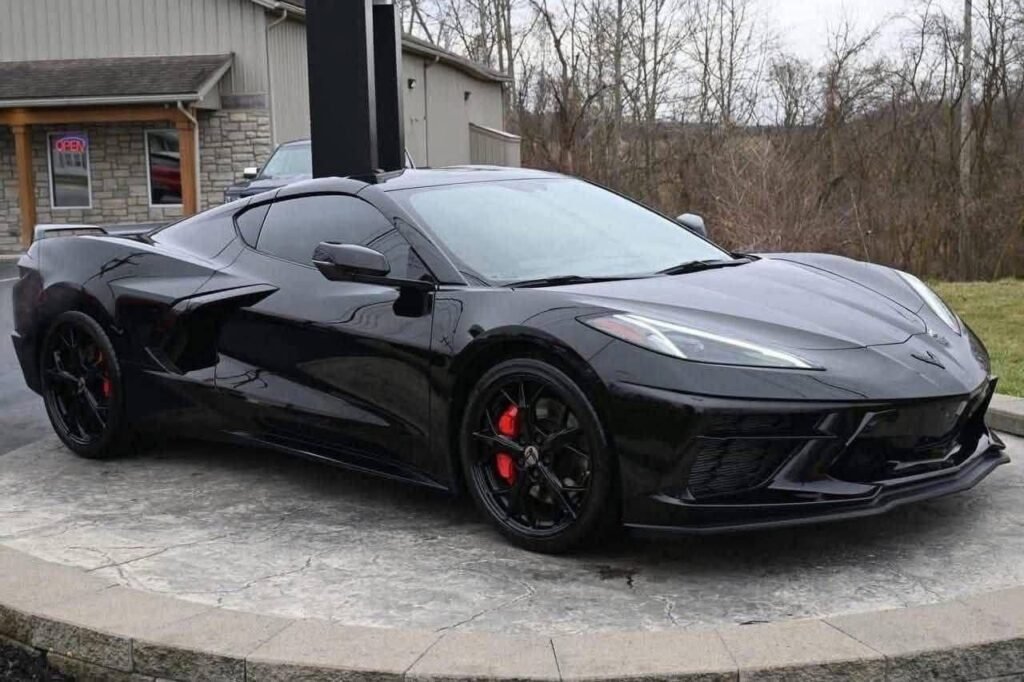
Supercars: the 2023 Chevrolet Corvette Stingray at $6,000. See cheap supercars for sale.
JDM: the 2020 Nissan GT-R at $5,000.
Trucks: the 2021 Dodge Ram at $6,000. See trucks & SUVs for sale.
Wider market at affordable striker cars and the full inventory.
Buy Car With Crypto — FAQ
Can you buy a car with crypto?
Yes. It’s legal almost everywhere and increasingly common in cross-border sales.
What crypto should I use?
USDT on TRC20. Stable, fast, and fees are fractions of a cent.
Is paying for a car in crypto safe?
The transfer is safe. The risk is irreversibility, which a small deposit and a balance-on-delivery structure solves.
What’s the biggest crypto car scam?
A wallet address sent in chat that differs from the one on the seller’s website. Always verify.
Which network should I send USDT on?
Whatever the seller specifies. Ours is TRC20. Sending on the wrong network can lose funds.
What are the fees?
Under a dollar on TRC20. $5–$30 on Ethereum. More on Bitcoin when the network is busy.
Do I need a credit check?
No. You’re paying, not borrowing.
Do I pay tax?
Often yes, on the disposal of the crypto. Rules vary — check locally.
Can I pay the balance in crypto too?
Yes, or in cash on delivery, as agreed.
What’s the deposit?
$1,000 in USDT or Bitcoin. See deposit wallets.
What if the seller disappears?
You lose $1,000, not the full price — because the balance is paid on delivery.
How do I verify a transaction?
Paste the hash into a block explorer. It’s public.
Sources
- Wikipedia — Cryptocurrency
- Wikipedia — Stablecoin
- Wikipedia — Bitcoin
- Wikipedia — Tron (blockchain)
- NICB — VIN check
- NHTSA — VIN decoder
Final Word
Buying a car with crypto is a practical choice, not a novelty. It’s fast, cheap, global and requires nobody’s permission — which is exactly what a cross-border purchase needs.
But treat it with the respect irreversibility demands. Take the wallet from the site, not the chat. Match the network. Send a test amount. Keep the deposit small and the balance on delivery.
Do that and crypto is the smoothest payment rail you’ll ever use for a car.
Fourteen Camaros in stock from $2,800. Deposit in USDT or BTC, balance on delivery.
Deposit wallets → · Full inventory → · How to buy → · Contact