Let’s answer the question first, because that’s what you came for.
A striker car typically costs 30 to 50% less than the same car with a clean title. That’s the honest range. A car that trades at $40,000 on the normal market can usually be bought as a striker car somewhere in the $20,000–$28,000 region. On the extreme end, you’ll see the gap widen dramatically — our listings include a 2023 Rolls-Royce Cullinan at $9,000, which is a number that makes people assume the page has a bug.
But “30 to 50% less” isn’t the whole story. The sticker price on a striker car is not the price you pay, and anyone telling you otherwise is skipping the important bit.
This page breaks down what actually drives a striker car price, what the real total comes to once shipping, duty and registration are added, and how to tell a fair price from a bad one. No fluff. Let’s get into it.
What Actually Determines a Striker Car Price
A striker car price isn’t random. It’s built from a handful of factors, and once you know them, you can read any listing and understand roughly where the number came from.
The car itself. Make, model, year, mileage, condition. This is the base. A 2025 Porsche 911 GT3 RS is worth more than a 2014 Kawasaki. Obvious, but it’s the foundation.
Condition. This matters more on striker cars than clean-title cars, because condition varies wildly between units. A car that runs and drives cleanly prices higher than one needing suspension work. Two listings with the same model and year can sit thousands apart purely on condition.
Damage history. If a car was written off by an insurer, the extent of the original damage affects the price. Light cosmetic damage prices higher than structural repair.
Mileage. Same as any car. Lower miles, higher price.
Title status. No title is the baseline for a striker car, so it doesn’t push the price down further than it already has. But a car with some paperwork available will usually command a little more.
Shipping distance. Longer routes cost more to move. This gets priced in.
Demand. Some models move fast and hold price. Others sit. A Hellcat sells quicker than a base sedan, and the price reflects it.
The VIN. An intact, checkable VIN is non-negotiable and expected. Anything odd here affects price.
Those are the levers. Notice that “stolen” and “salvage” aren’t on the list in any formal way — because a striker car isn’t defined by either. It’s defined by missing paperwork, and the price reflects the paperwork, not the car.
Why Striker Car Prices Are So Low
This is the question everyone asks, and it deserves a proper answer rather than hand-waving.
The saving doesn’t come from the car being worse. It comes from the sale process being stripped of layers.
No dealership. A dealer has a showroom, staff, commission, insurance, marketing and a margin. All of that is baked into the price you pay. A striker car sale cuts it out entirely.
No finance. Finance adds interest, arrangement fees and credit checks. Cash-only sales don’t. That’s often thousands of dollars kept in your pocket.
No upfront title transfer. A state-to-state title transfer carries fees and tax. Without it, that cost disappears.
No warranty. You’re buying as-is. That’s a real saving for the seller, passed to you.
Bulk sourcing. Striker cars come from insurance write-offs, salvage auctions and fleet liquidations — channels where vehicles are disposed of at wholesale, not retail. If you want the mechanics of this, our no title car wholesale price page goes deep on it.
Export orientation. Many of these cars are sold to international buyers who never intended to register them in the US anyway, so the paperwork becomes less relevant and the price falls accordingly.
Add those together and you get a genuine 30–50% gap. It’s not a gimmick and it’s not a discount on quality. It’s a discount on process.
What You Actually Pay — The Real Total
Now the part people skip, and the part that matters most.
The advertised striker car price is the car. It is not your total outlay. Here’s what else exists:
Deposit. $1,000, paid up front to lock the vehicle. Details on our deposit wallets page.
Shipping. Varies by destination, port and method. Container shipping costs more than roll-on/roll-off but offers more protection — our container striker cars page explains the trade-off.
Import duty. Set by your country. This is often the biggest unknown, and it’s entirely on you to confirm. Speak to a local clearing agent before you commit.
Local registration. Also set by your country. Varies hugely.
Inspection. Optional but recommended, especially on a performance car.
Running costs. Servicing, tyres, brakes, insurance, fuel. A cheap performance car still costs performance-car money to maintain. This is where people get caught.
So when you see a striker car price of $5,000, your real landed cost might be $7,000–$9,000 depending on where you are. That’s still a huge saving. But know the number before you commit, not after.
Real Striker Car Price Examples
Here’s what things actually cost on our lot right now. This is the best way to understand striker car pricing — real listings, real numbers.
Performance Sedans
The strongest value in the yard. The 2021 Audi RS 7 is priced at $5,000. The 2022 Audi RS 5 is $2,500. The 2022 BMW M550i and 2019 BMW M5 both sit at $3,500. The 2021 AMG E-Class 63 S is $4,500. The 2022 Mercedes-Benz E450 is $4,000.
For context, a clean 2019 BMW M5 in the US trades well north of $40,000. Ours is $3,500. That’s not a 30–50% saving. That’s a different universe.
Muscle Cars
The 2018 Camaro ZL1 1LE is $3,500. The 2020 Dodge Challenger SRT Hellcat is $4,500. The 2023 Camaro SS is $3,000. The 2025 Ford Mustang GT is $5,000.
Exotics
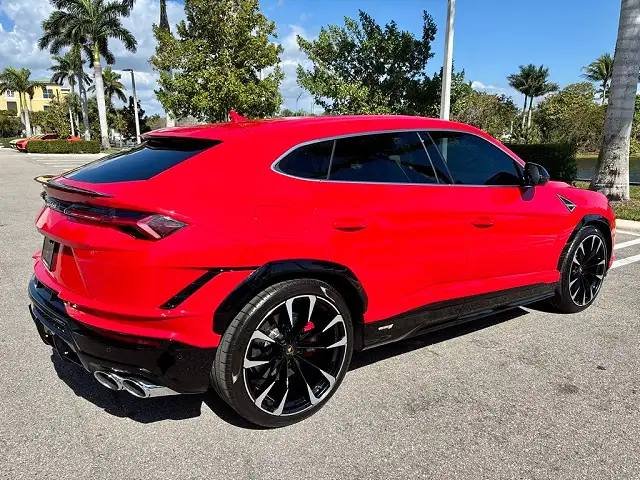
The 2021 Ferrari F8 Spider is $8,000. The 2018 McLaren 570S Spider is $6,500. The 2023 Lamborghini Huracán Tecnica is $12,000. The 2021 Lamborghini Urus is $13,500.
Luxury SUVs
The 2023 Range Rover is $5,500. The 2026 Cadillac Escalade V-Series is $9,000. The 2023 BMW X5 M is $5,000.
The Top End
A 2023 Rolls-Royce Cullinan at $9,000. A 2020 Bentley Continental GT at $8,500. A 2015 Maserati Quattroporte S Q4 at $2,500.
Sensible Dailies
The 2022 Honda Accord is $1,500. The 2020 Infiniti Q50 3.0t is $1,500. The 2022 Kia Stinger GT1 is $3,500. The 2020 Acura RDX is $3,000.
Trucks, Bikes and Off-Road
The 2023 Dodge Ram TRX is $6,500. The 2021 Honda CBR1000RR-R Fireblade is $2,000. The 2024 Stark Varg 80hp is $2,500.
Every one of those is a live price. The full inventory has more.
Striker Car Price vs Dealership Price
Let’s put the two side by side, because the gap is the entire point.
| Dealership | Striker car | |
|---|---|---|
| Purchase price | Market retail | 30–50% lower |
| Dealer markup | Yes | None |
| Finance | Usually needed | None |
| Interest | Yes | None |
| Credit check | Yes | No |
| Sales tax upfront | Often | Usually avoided |
| Warranty | Yes | No |
| Title | Yes | No |
| Trackers | Usually fitted | Removed |
| Inspection before paying | Limited | Full, with your own mechanic |
| Delivery | Local | Worldwide |
Read that table honestly. You lose the title, the warranty and the tracker. You gain a massive price cut, full inspection rights and no debt.
For most buyers, that trade is obviously worth it. For some, the warranty matters more. Neither is wrong.
Are Cheap Striker Cars Bad Cars?
The most common assumption is that a low striker car price means a bad car. It doesn’t.
Price is low because the process is cheap, not because the car is defective. You’re buying a car whose paperwork got lost in a logistics chain — not a car that’s falling apart.
That said, condition varies between units. Some are pristine. Some need work. Some are genuinely project cars. That’s why inspection exists and why you should always ask for photos, video and condition notes before paying.
If you want a feel for what quality looks like at these prices, our affordable striker cars page and striker sports cars page both cover real examples.
How to Tell a Good Striker Car Price From a Bad One
Use this as your filter.
Good sign: the price sits 30–50% below the clean-title equivalent for that model, year and mileage.
Good sign: the seller gives you the VIN without being asked.
Good sign: condition is described honestly, including problems.
Good sign: you’re allowed to inspect on arrival before paying the balance.
Red flag: a price way below everything else with no explanation.
Red flag: vague condition answers.
Red flag: no VIN until after you pay.
Red flag: pressure to pay the full amount up front.
Red flag: deposit taken but no shipping timeline given.
None of those red flags are unique to striker cars. They’re just good buying practice.
The Hidden Costs People Forget
Let me list them plainly, because this is where budgets break.
Import duty. Often the largest single cost after the car. Country-specific. Confirm it.
Registration fees. Also country-specific, and can be significant.
Compliance work. Some countries require headlight, emissions or lighting modifications before registration. Budget for it.
Insurance. An imported performance car costs more to insure than a local hatchback. Get a quote before you buy.
Servicing. Annual, and on a performance car, expensive. Independents are cheaper than main dealers — find one.
Tyres and brakes. Consumables on a heavy fast car. Plan for them.
Fuel. A twin-turbo V8 drinks. A Caddy van doesn’t. Choose accordingly.
If you add all of those up, the true cost of ownership is real. But it’s still dramatically less than buying the same car clean-title, because you saved so much on the front end.
The Payment Structure
There’s no finance, so the payment structure is simple. Two payments.
Payment one: the deposit. $1,000, in USDT or Bitcoin. Locks the car.
Payment two: the balance. Cash, on delivery, once registration is confirmed.
That’s it. No credit check, no interest, no monthly debit order, no balloon payment. If you’ve been burned by car finance before, this is a refreshing change.
Should You Negotiate on a Striker Car Price?
Yes, but manage your expectations.
Striker car prices are set close to the bone because the whole model depends on volume and turnover. There isn’t a fat dealer margin to squeeze. A reasonable offer on a car that’s been sitting might work. A lowball on a fresh, in-demand listing usually won’t.
The best approach: ask once, be specific, and be ready to move. If the car is priced right, someone else is looking at it too.
Striker Car Price by Budget Tier
Useful if you’re shopping to a number rather than a model.
Under $2,000
The entry tier. Real cars, genuinely cheap. The 2022 Honda Accord, the 2020 Infiniti Q50 3.0t, the 2021 Honda CBR1000RR-R Fireblade, the 2014 Kawasaki ZX-6R, and the 2021 Chrysler 300S.
$2,000 – $5,000
Where the value is best. The 2022 Audi RS 5, the 2019 BMW M5, the 2018 Camaro ZL1 1LE, the 2022 Kia Stinger GT1, the 2020 Acura RDX, the 2013 Rolls-Royce Ghost, and the 2024 Acura TLX Type S.
$5,000 – $10,000
Serious machinery. The 2023 Range Rover, the 2023 BMW X5 M, the 2020 Bentley Continental GT, the 2021 Ferrari F8 Spider, the 2024 Lexus GX550, and the 2023 Rolls-Royce Cullinan.
$10,000+
The top of the yard. The 2023 Lamborghini Huracán Tecnica at $12,000, the 2024 GLS 600 Maybach at $12,000, the 2021 Lamborghini Urus at $13,500, and the 2026 Ford F450 Platinum at $12,000.
If you want more depth on shopping to a budget, our budget striker cars and cheap no title cars pages cover it in detail.
Shop by Brand Instead
If you know what you want, go straight to the brand.
Porsche · Toyota · Nissan · Maserati · Acura · Rolls-Royce · Chrysler · Jeep · Honda · Ford · Infiniti · Ferrari · Bentley · Land Rover · GMC · Off-road · Power bikes
Common Pricing Myths
“If it’s that cheap, something’s wrong.” Condition varies, but the price is driven by paperwork, not damage.
“The price is the price.” There are always added costs. Budget for them.
“Striker cars are all the same price.” Not remotely. Prices span $700 to $14,500 on our lot alone.
“You can’t get a bargain.” You can. That’s the entire model.
“Cheap means unreliable.” Cheapest thing on our lot is a Honda Accord. Make of that what you will.
Striker Car Price — FAQ
How much does a striker car cost?
Typically 30–50% below the clean-title equivalent. On our lot, prices run from around $700 to $14,500 depending on the vehicle.
Why are striker cars so cheap?
No dealer, no finance, no upfront title transfer, no warranty, wholesale sourcing.
Is the listed price the total price?
No. Add deposit, shipping, import duty, registration and running costs.
How much is the deposit?
$1,000, in USDT or Bitcoin.
Are there hidden fees?
Not hidden — but there are costs you must budget for, mainly duty and registration in your country.
Can I get finance on a striker car?
No. Deposit up front, balance in cash on delivery.
What’s the cheapest car you have?
Around $700 for a motorcycle, $1,500 for a car.
What’s the most expensive?
Currently $14,500 for a 2025 Porsche 911 GT3 RS.
Do you ship worldwide?
Yes — to any port.
Can I negotiate?
Yes, but prices are already tight.
Final Word on Striker Car Price
The striker car price is the whole reason this market exists. It’s not a discount on quality — it’s a discount on the layers between you and the car. Dealership, finance, title transfer, warranty. Strip those out and the number falls by a third or more.
Know the real total. Budget for duty, registration and running costs. Inspect properly. Then enjoy the fact that you’re driving a car that cost you a fraction of what the next person paid.
View all striker cars for sale → · Deposit wallets → · What are striker cars → · Why buy from us