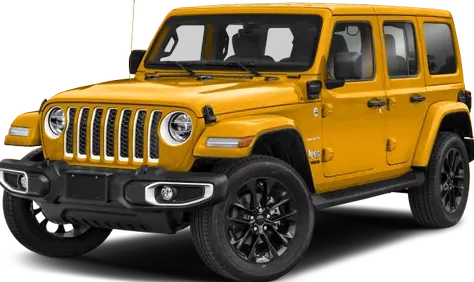

No title cars for sale are exactly what they sound like — real, driveable vehicles sold without their title document. They cost less because the paperwork is missing, not because the car is damaged. Prices typically run 30–50% below the clean-title equivalent, and on premium cars that gap can be tens of thousands.
That’s the short version. Now the useful version.
Most people who hear “no title” assume something’s wrong. Something must be, right? Why else would a car be sold without papers? The truth is less dramatic and more mundane: titles get separated from cars all the time, through insurance processes, auctions, fleet disposals and simple administrative gaps. The car keeps going. The paper doesn’t.
What’s left is a vehicle that’s mechanically normal and administratively loose. For a buyer who understands that, it’s an opportunity. For everyone else, it’s a mystery they walk past.
We sell no title cars worldwide, from $1,500 daily drivers up to six-figure exotics. This page explains what they are, why they’re cheap, how to register one, what we stock, and how to avoid the scams that give this market a bad name.
What Exactly Are No Title Cars?
A no title car is a vehicle sold without a title document. That’s it. The definition doesn’t stretch further.
The title is the legal proof of ownership. Without it, you can’t register the car in the conventional way, and a bank won’t finance it. But the car itself — the metal, the engine, the interior — is unaffected.
Critically, a no title car still has a VIN. The vehicle identification number is a 17-character code stamped into the chassis that identifies the vehicle for its entire life. That number is what makes a no-title car registrable. It’s your anchor, and everything depends on it.
So the accurate mental model is this: a no title car is a car with an identity but without a deed.
That’s why these cars work. They aren’t anonymous. They’re just undocumented at the ownership level.
Why Do Cars End Up Without Titles?
More reasons than you’d think, and none of them are sinister.
Insurance write-offs. Modern cars are expensive to repair. A moderate impact can involve sensors, airbags, cameras, radar, paint, suspension and electronics — and the repair bill spirals. Insurers frequently decide a vehicle is uneconomical and pay out instead. Once a car enters the salvage chain, the paperwork becomes fragile. You can read more about the salvage title category if you want the formal detail.
Auction chains. Salvage auctions, fleet liquidations and dealer disposals move vehicles in bulk. When a car passes through multiple lots and storage yards, documents don’t always make the full journey.
Export inventory. When a vehicle is destined for another country, some buyers care more about the engine and interior than a title that won’t transfer cleanly across borders anyway.
Fleet and repossession sales. Finance companies and fleet operators dispose of cars constantly. In high-volume disposal, gaps happen.
Lost documentation. Sometimes a title is simply lost. In a house move, a storage unit, a filing cabinet. No story. Just gone.
Estate situations. When an owner dies and the paperwork was never transferred, a car can sit in limbo for years.
None of this means the car is bad. It means the car arrived through a route that didn’t preserve its papers.
Why No Title Cars Are Cheaper
This is the part buyers come for, so let’s be precise about it.
The discount doesn’t come from quality. It comes from three structural things.
Smaller buyer pool. Most buyers get nervous at the phrase “no title.” Dealerships won’t touch them. Banks won’t finance them. That reduced demand pushes prices down.
No dealer layer. A dealer has showroom costs, commission and margin. Buying direct strips it out.
No finance, no upfront transfer. Cash-only sales avoid interest, arrangement fees and state transfer costs.
Stack those together and you get a genuine 30–50% gap. On a $60,000 car, that’s $18,000–$30,000 in your pocket.
For a deeper look at how this pricing actually forms, our no title car wholesale price and striker car price pages break it down properly.
Are No Title Cars Legal to Buy?
Yes. This is the single most common question, so let’s settle it cleanly.
A no title car is a legal vehicle. It exists, it has a VIN, and it can be registered. You are not buying something grey or dodgy — you’re buying a car whose ownership document is missing.
What you take on is a process. Registration takes longer and costs more than a standard transfer. In most US states, that means a bonded title route. Elsewhere, it means whatever your country requires for imported untitled vehicles.
The motor vehicle registration framework differs by country, and the NHTSA vehicle title resources explain how the US system works. If you want a broader view of the legal side, our what are striker cars page covers it too.
The risk people worry about is a later claim from a previous owner or insurer. That’s real, and it’s why VIN checks matter. But it’s also priced into what you paid.
How to Register a No Title Car
Rules vary by country, so treat this as a general route rather than a promise.
Step one: import and clear customs. Your broker or clearing agent handles this.
Step two: local inspection. Many jurisdictions inspect imported vehicles before allowing registration.
Step three: apply using the VIN. The VIN is your identifying reference throughout.
Step four: title application. Where a title is required locally, you apply for a replacement or a bonded title — a surety bond that covers any later ownership claim. After a waiting period with no disputes, many jurisdictions allow conversion to a clean title.
We work with legal and DMV contacts to smooth this. Our register your striker car page walks through the routes, and if you’re dealing with a registration-specific situation, see no registration cars and unregistered vehicles.
Confirm your local rules before you buy, not after.
What No Title Cars We Actually Have in Stock
Our inventory rotates constantly, but it always leans premium. Here’s the current spread.
The Supercar and Exotic End
This is where the no title cars for sale market gets interesting. The 2023 Lamborghini Huracán Tecnica is $12,000. The 2021 Lamborghini Urus is $13,500. The 2021 Ferrari F8 Spider is $8,000. The 2018 McLaren 570S Spider is $6,500. And the 2020 Bentley Continental GT is $8,500.
For more on the Italian side, see Lamborghini cars for sale and Ferrari cars for sale.
Ultra-Luxury
Yes, there are Rolls-Royces in this market. The 2023 Rolls-Royce Cullinan is $9,000. The 2013 Rolls-Royce Ghost is $8,000. The 2015 Maserati Quattroporte S Q4 is $2,500. See Rolls-Royce cars for sale and Maserati cars for sale.
Performance Sedans
The best value in the yard. The 2021 Audi RS 7 is $5,000. The 2022 Audi RS 5 is $2,500. The 2019 BMW M5 and 2022 BMW M550i are $3,500 each. The 2021 AMG E-Class 63 S is $4,500.
Muscle Cars
The 2018 Camaro ZL1 1LE is $3,500. The 2020 Dodge Challenger SRT Hellcat is $4,500. The 2023 Camaro SS is $3,000. The 2025 Ford Mustang GT is $5,000.
Sports Cars
The 2025 Porsche 911 GT3 RS is $14,500. The 2020 Porsche 911 Carrera S is $10,500. The 2023 Chevrolet Corvette Stingray is $6,000. The 2020 Nissan GT-R is $5,000.
Luxury SUVs and Trucks
The 2023 Range Rover is $5,500. The 2026 Cadillac Escalade V-Series is $9,000. The 2023 Dodge Ram TRX is $6,500. The 2026 Ford F450 Platinum is $12,000.
Reliable Dailies
Not everything is exotic. The 2022 Honda Accord is $1,500. The 2020 Infiniti Q50 3.0t is $1,500. The 2022 Kia Stinger GT1 is $3,500. The 2024 Acura TLX Type S is $3,000.
Bikes and Off-Road
The 2021 Honda CBR1000RR-R Fireblade is $2,000. The 2024 Stark Varg 80hp is $2,500. The 2023 Surron Ultra Bee is $2,500.
The full inventory has everything.
Condition: What to Expect From a No Title Car
Condition varies between units. That’s the honest answer, and it’s why inspection matters.
Some no title cars are pristine — low mileage, no damage, ready to drive. Some need cosmetic work. Some need suspension or body repair. A few are best used for parts.
What they are not is uniformly wrecked. That’s the assumption to drop.
Before buying, ask for photos, a walkaround video, a condition report and the VIN. If a seller provides all four without being chased, that’s a good sign. Our mechanical inspection guide for untitled vehicles covers what to check, and the pre-purchase inspection checklist is worth running through.
How to Verify a No Title Car Before You Pay
This is where you separate a good buy from a gamble.
Get the VIN. Always. Before any money moves.
Run a history check. Look for salvage records, theft flags and prior registrations. The INTERPOL vehicle crime database is useful for checking against international theft records, and the NICB maintains a theft-check service in the US.
Confirm the VIN physically. When you inspect, make sure the VIN on the car matches the VIN you were given. Check the plate and the chassis stamp.
Check for frame damage. Structural repair is the thing that costs real money later. Our frame damage detection for no title cars page explains what to look for.
Run a diagnostic scan. An OBD-II scanner reading tells you what the ECU knows that the seller might not.
Ten minutes of checking saves months of argument.
How to Buy No Title Cars From Us
The process is simple, and we don’t dress it up.
Step one: choose your car. Browse, then message us. Ask for extra photos, video, the VIN — whatever you need.
Step two: get the details. Condition notes, mileage, anything relevant. Straight answers.
Step three: pay the deposit. $1,000, in USDT or Bitcoin. That locks the car. Addresses are on our deposit wallets page.
Step four: we ship. We handle export paperwork and freight to your chosen port.
Step five: you inspect on arrival. Bring your own mechanic. It’s as-is, which means transparency, not a gamble.
Step six: we handle registration. Title and registration in your name.
Step seven: you pay the balance. Cash on delivery, once registration is confirmed.
Two payments. No finance. No credit check. No interest.
If you want the longer version, our how to buy a striker car guide covers every stage in detail.
Shipping No Title Cars Worldwide
We ship internationally as standard. Method depends on destination and value:
- Container shipping for higher-value cars and buyers who want more protection. Explained on our container striker cars page.
- Roll-on/roll-off for cheaper and more straightforward routes.
- Overland for certain destinations.
The export documentation, bill of sale and supporting paperwork travel with the vehicle. Your local broker handles import clearance. Transit typically runs two to four weeks from the car leaving port.
If you’re outside the US, our international no title cars and export striker cars pages are written for you.
What No Title Cars Actually Cost
The purchase price is not the total. Budget for:
- Car — the price you see
- Deposit — $1,000
- Shipping — varies by destination and method
- Import duty — set by your country, confirm with a local agent
- Registration — set by your country
- Inspection — optional but recommended
- Running costs — servicing, tyres, brakes, insurance, fuel
That last one catches people. A $3,500 M5 still costs M5 money to run. Budget for the car you’re buying, not the price you paid.
If you’re shopping to a number, see budget striker cars and cheap no title cars.
Scams to Watch For
The biggest risk in this market isn’t the cars. It’s sellers who take deposits on vehicles that don’t exist.
No VIN = hard stop. A serious seller gives the VIN freely.
No real photos. Stock images are a warning sign. Ask for photos of the actual car.
Pressure to pay in full. Deposit, then balance on delivery is normal.
Vague condition answers. Honest sellers describe problems.
No shipping timeline. You should get a realistic estimate.
No verifiable presence. Check socials, check the site, check they’ve been around.
Our why buy from us page explains how we handle disclosure, and the title missing vehicle and no title vehicles for sale pages cover similar ground from other angles.
No Title Cars vs Clean Title Cars
| Clean title | No title | |
|---|---|---|
| Purchase price | Full market | 30–50% lower |
| Registration | Straightforward | Process required |
| Finance | Available | Cash only |
| Resale liquidity | High | Lower |
| Trackers | Usually fitted | Removed |
| Warranty | Sometimes | None |
| Buyer pool | Large | Smaller |
Clean title wins on convenience and liquidity. No title cars win on price. If you intend to hold the car long-term, the trade works in your favour. If you flip cars quickly, the liquidity gap matters more.
Who Buys No Title Cars?
Buyers worldwide, in markets where imported luxury cars are thin and expensive. Exporters who source and handle local titling themselves. US buyers in states with straightforward bonded title processes. Enthusiasts chasing a specific model at a price they can actually afford.
If you want a car you couldn’t otherwise justify, this is the route.
No Title Cars for Sale — FAQ
What is a no title car?
A vehicle sold without its title document. It’s a paperwork status, not a damage category.
Are no title cars legal?
Yes. They have VINs and can be registered.
Can I register a no title car?
Yes, via a replacement or bonded title route depending on your country.
Why are no title cars cheaper?
Smaller buyer pool, no dealer layer, no finance, no upfront title transfer.
Are no title cars damaged?
Not necessarily. Condition varies per vehicle — inspect.
Do no title cars have a VIN?
Yes. The VIN is intact and checkable.
How much is the deposit?
$1,000, in USDT or Bitcoin.
Do you ship worldwide?
Yes — to any port.
How long does shipping take?
Usually two to four weeks from port departure.
What’s the cheapest no title car you have?
Around $1,500 for a car.
Can I inspect before paying the balance?
Yes, and you should.
Final Word
No title cars for sale are the smartest value play in the used car market, and they’re still misunderstood enough that the prices stay low. A missing title means a missing document — nothing more. The car is real, the VIN is real, and the saving is real.
Do the checks, budget the extras, inspect properly. Then enjoy the fact that you paid a third less than the next person.
View all no title cars for sale → · Deposit wallets → · What are striker cars → · How to buy