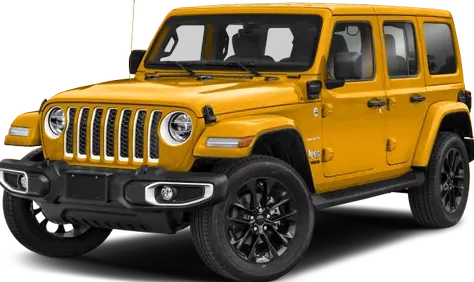

A car without title for sale is a real, working vehicle being sold without its ownership document. It has an engine, a VIN, and a history. What it doesn’t have is the paper that proves who owns it.
That’s the definition, and it’s less scary than it sounds.
The reason people hesitate is that “no title” sounds like “no identity.” It isn’t. A car without a title still has a VIN — a 17-character code stamped into the chassis that identifies it permanently. The VIN is what makes registration possible. The title is just the deed that goes with it.
So if you’ve found a car without a title for sale and you’re wondering whether to bother, the answer depends on three things: what the car is, what you’ll pay, and whether you can register it where you live. This page covers all three, plus what to check, what documents to demand, and where to find these cars at sensible prices.
What Exactly Is a Car Without a Title?
A car without title is a vehicle sold without a title document attached. No title means no legal proof of ownership in the conventional sense — which is why a bank won’t finance it and a cautious buyer walks away.
But strip away the paperwork and you have a normal car. It drives. It passes inspection. It has a service history in most cases. The only gap is the document.
There are related terms worth separating, because people mix them up constantly:
Salvage title — a car written off by an insurer. It has a title, but of a specific legal category. Learn more about the salvage title classification.
Untitled car — a vehicle that was never properly titled, often a kit car or a long-abandoned project.
Bill of sale car — sold on a bill of sale alone, with no title. Common in export.
Car without title — the plain-English version. No ownership document, for whatever reason.
In trade language you’ll also hear “striker car” — our term for a vehicle sold without a title and with trackers removed. If that’s new to you, our striker car meaning page explains it properly.
Why Would a Car Have No Title?
The reasons are mundane, and none of them involve anything shady.
Insurance write-offs. Modern cars are costly to repair. A moderate impact can involve sensors, airbags, cameras, radar, paint and electronics. Insurers often decide a car is uneconomical and pay out instead, pushing it into the salvage chain where paperwork gets fragile.
Auction and disposal chains. Vehicles move through salvage auctions, fleet liquidations and dealer disposals in bulk. When a car passes through several lots and storage yards, documents don’t always travel with it.
Export inventory. Cars bought specifically for export often skip the title step entirely, because a US title won’t transfer cleanly to another country’s system anyway.
Lost documentation. Sometimes a title is simply lost. In a move, a storage unit, a filing cabinet.
Estate situations. When an owner dies and the transfer was never completed, a car can sit in limbo for years.
Repossession sales. Finance companies dispose of cars constantly. Gaps happen.
None of this means the car is bad. It means it arrived through a route that didn’t preserve its papers.
Is a Car Without a Title Worth Buying?
Sometimes. It depends on what you’re paying and whether you can register it.
The economics are simple: cars without titles sell for 30–50% less than the same car with a clean title. That’s the entire appeal. If you can register the car where you live, and the price reflects the paperwork gap, you’re ahead by a wide margin.
The counterweight is process. Registration takes longer and costs more. You’ll need to apply for a bonded title or an equivalent. Resale liquidity is lower, because the next buyer will have the same questions you did.
For most buyers, the maths still works. For someone who wants to flip a car in six months, it works less well.
If you want the fuller picture on pricing, our striker car price and no title car wholesale price pages go into how these numbers form.
Can You Register a Car Without a Title?
Yes, in most countries. The route differs, but the principle is the same: you use the VIN to identify the vehicle, then apply for documentation that stands in for the missing title.
In the United States, the common route is a bonded title. You get the car appraised, buy a surety bond for a percentage of that value, submit it to your state DMV with a VIN verification, and after a waiting period you receive a bonded title. Many states allow conversion to a clean title after a few years if no ownership dispute arises. The bonded title mechanism is explained in more detail here.
Other countries have their own equivalents. Some require a government inspection. Some require a notarised bill of sale. Some have specific import categories for untitled vehicles. What matters is the destination country’s rules, not the US ones.
The NHTSA vehicle title resources cover the US framework, and the general motor vehicle registration process is worth understanding before you commit.
If you’re going through this with us, our register your striker car page covers the routes we help with.
Registration Routes, Explained Simply
Three realistic paths exist. Pick the one that fits your country.
Route 1: Bonded Title
Appraise the car, buy a surety bond, submit with a VIN verification, wait, receive a title. The most common US route. Requires patience and a modest fee.
Route 2: Bill of Sale Registration
Some jurisdictions accept a notarised bill of sale plus a VIN inspection. Simpler, but not available everywhere. We provide a bill of sale as standard.
Route 3: Import Category Registration
Many countries have a specific import category for untitled vehicles. You register through that, then convert later if you want.
Whichever route you take, the VIN is your anchor. Get it, verify it, and keep it on every document.
Documents You Should Get
Before money changes hands, insist on:
- A bill of sale naming you, the vehicle, the VIN and the price
- The VIN, written down and verified
- Photos of the actual vehicle, not stock images
- A condition report in writing
- Any available history — service records, prior registration, inspection notes
If a seller provides all of that without being chased, that’s a good sign. If they don’t, ask why.
What to Check Before You Buy
This is where a good buy becomes a bad one, or vice versa.
Verify the VIN physically. When you inspect, confirm the VIN plate and chassis stamp match the number you were given. A mismatch is a red flag.
Run a history check. Look for salvage records, theft flags and prior registrations. The INTERPOL vehicle crime database is useful internationally, and NICB runs a theft check in the US.
Check for frame damage. Structural repair is the expensive one. Our frame damage detection for no title cars page explains what to look for.
Scan the ECU. An OBD-II scanner reading reveals fault codes the seller may not mention.
Get a mechanical inspection. Our mechanical inspection guide for untitled vehicles and pre-purchase inspection checklist cover this in detail.
Confirm your local registration route first. Before you buy, not after.
Red Flags When Buying a Car Without a Title
No VIN until you pay. Hard stop.
Stock photos only. Ask for real images.
Vague condition answers. Honest sellers describe problems.
Pressure to pay in full. Deposit, then balance on delivery is standard.
No shipping timeline. You should get a realistic estimate.
A price far below everything comparable with no explanation.
No verifiable seller presence. Check the site, the socials, the history.
Our why buy from us page explains how we handle disclosure.
Where to Buy a Car Without a Title
You can buy privately, at salvage auctions, or from a specialist. Specialists are easier because they’ve already done the sourcing and the paperwork legwork — and they ship.
We sell cars without titles worldwide. Here’s what’s live right now.
Exotics and Supercars
The 2023 Lamborghini Huracán Tecnica at $12,000. The 2021 Ferrari F8 Spider at $8,000. The 2018 McLaren 570S Spider at $6,500. The 2020 Bentley Continental GT at $8,500.
Ultra-Luxury
The 2023 Rolls-Royce Cullinan at $9,000. The 2013 Rolls-Royce Ghost at $8,000. The 2015 Maserati Quattroporte S Q4 at $2,500.
Performance Sedans
The 2021 Audi RS 7 at $5,000. The 2022 Audi RS 5 at $2,500. The 2019 BMW M5 and 2022 BMW M550i at $3,500 each. The 2021 AMG E-Class 63 S at $4,500.
Muscle Cars
The 2018 Camaro ZL1 1LE at $3,500. The 2020 Dodge Challenger SRT Hellcat at $4,500. The 2023 Camaro SS at $3,000. The 2025 Ford Mustang GT at $5,000.
Sports Cars
The 2025 Porsche 911 GT3 RS at $14,500. The 2020 Porsche 911 Carrera S at $10,500. The 2023 Chevrolet Corvette Stingray at $6,000. The 2020 Nissan GT-R at $5,000.
SUVs and Trucks
The 2023 Range Rover at $5,500. The 2026 Cadillac Escalade V-Series at $9,000. The 2023 Dodge Ram TRX at $6,500. The 2026 Ford F450 Platinum at $12,000.
Dailies
The 2022 Honda Accord at $1,500. The 2020 Infiniti Q50 3.0t at $1,500. The 2024 Acura TLX Type S at $3,000. The 2022 Kia Stinger GT1 at $3,500.
Bikes and Off-Road
The 2021 Honda CBR1000RR-R Fireblade at $2,000. The 2024 Stark Varg 80hp at $2,500.
The full inventory has more, and it changes constantly.
Shop by Brand
If you know what you want, go direct: Porsche · Toyota · Nissan · Maserati · Acura · Rolls-Royce · Chrysler · Jeep · Honda · Ford · Lamborghini · Ferrari
What These Cars Cost
The price you see isn’t the total. Budget for:
- Car — the listed price
- Deposit — $1,000
- Shipping — varies by destination and method
- Import duty — set by your country; confirm with a local agent
- Registration — set by your country
- Inspection — optional but wise
- Running costs — servicing, tyres, brakes, insurance, fuel
That last line is the one people miss. A cheap performance car still costs performance-car money to maintain. Budget accordingly. Our budget striker cars and cheap no title cars pages cover this.
How Buying From Us Works
Pick your car. Message us. Ask for photos, video, the VIN.
Get the details. Mileage, condition, notes.
Pay the deposit. $1,000 in USDT or Bitcoin. That locks the car. See deposit wallets.
We ship. Export paperwork and freight to your port. See container striker cars for method options.
You inspect on arrival. Bring your own mechanic.
We handle registration. Title and registration in your name.
You pay the balance. Cash on delivery, once registration is confirmed.
No finance. No credit check. No interest. Full walkthrough in our how to buy a striker car guide.
Car Without Title for Sale — FAQ
What does it mean to buy a car without a title?
You’re buying the vehicle without its ownership document. It still has a VIN and can be registered.
Is a car without a title legal to buy?
Yes. It’s a legal vehicle with a paperwork gap.
Can you register a car without a title?
Yes, usually via a bonded title or equivalent, depending on your country.
How much cheaper is a car without a title?
Typically 30–50% below the clean-title equivalent.
Does it have a VIN?
Yes. The VIN is intact and checkable.
Can I get insurance on it?
Usually yes once registered. Check with your insurer.
What documents should I get?
A bill of sale, the VIN, photos, a condition report and any available history.
Do you ship worldwide?
Yes — to any port.
How much is the deposit?
$1,000 in USDT or Bitcoin.
What’s the cheapest you have?
Around $1,500 for a car.
Final Word
A car without title for sale is one of the best value plays in the market, and it stays that way because most buyers get spooked by the paperwork. The car is real. The VIN is real. The saving is real.
Confirm your registration route first, do the checks, budget the extras, and inspect properly. Then enjoy paying a third less than the person who bought the same car with a title.
View all cars without title → · Deposit wallets → · Register your car → · How to buy →