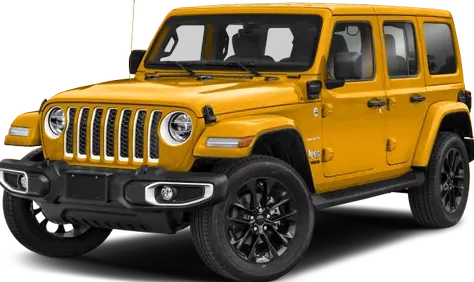
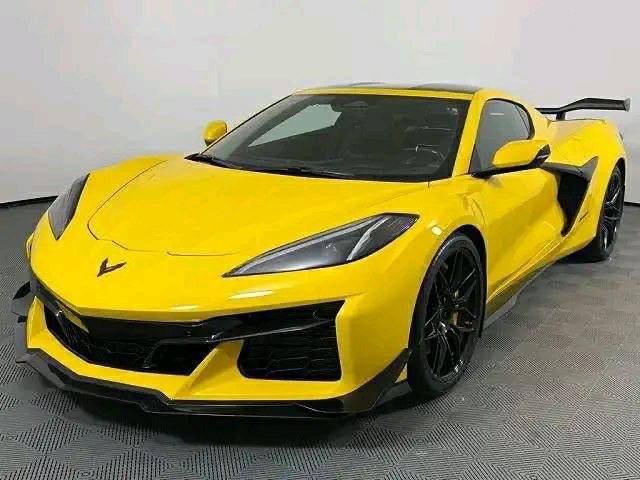
Rebuilt title cars for sale is a search that splits people in two. Half see a bargain — the same car, repaired properly, for 30% less. The other half see a warning label and walk away before they’ve even read the listing.
Both instincts have something behind them. The bargain is real. So are the traps. The difference between a brilliant rebuilt-title purchase and an expensive mistake is entirely in what you check before you buy, and that’s what this guide is for.
We’ll cover what a rebuilt title actually is, how a car ends up with one, exactly how much cheaper it should be, what it does to insurance and resale, how to register it, what to inspect, the specific scams in this corner of the market, and which cars make good buys versus which to avoid.
And because they’re the car people ask about most, every Camaro we have in stock is listed at the bottom — fourteen of them, from $2,800.
What a Rebuilt Title Actually Is
Let’s define it precisely, because the terminology gets abused.
A rebuilt title is a title issued to a vehicle that was previously declared a total loss by an insurer, then repaired, inspected and re-titled as roadworthy. It’s sometimes called a reconstructed title, a rebuilt salvage title, or a prior salvage title depending on the state. The words vary; the meaning doesn’t.
The sequence that produces one:
- The car is damaged.
- An insurer declares it a total loss — meaning repair cost exceeds a threshold percentage of value, usually 70–80%.
- The insurer pays out and takes ownership, and the state issues a salvage title.
- Someone buys the salvage car at auction.
- They repair it.
- It passes a state inspection.
- The state issues a rebuilt title.
The rebuilt title is the state’s stamp that says: this car was written off, then repaired, and we’ve looked at it. It’s a branded title — a title with a note attached — and it stays with the car.
See Wikipedia: salvage title for how the categories work across jurisdictions.
Why the Terminology Matters
“Rebuilt” is not “salvage.” They sit at different points in the same journey, and the difference is significant.
Salvage title — the car was written off and hasn’t been through the repair-and-inspect process yet. It may be a project or may need nothing. Registering one can require an inspection first.
Rebuilt title — the car was written off, repaired and inspected. It’s roadworthy and registerable. This is the stage you generally want.
Rebuilt salvage — a hybrid term some states use. Same idea.
Reconstructed — another word for rebuilt, used in different states.
Prior salvage — a brand showing the car was once salvage, now repaired.
Flood, hail, lemon — separate brands for separate causes.
The practical upshot: a rebuilt title is further along the process than a salvage title, and it carries less risk. If you’re choosing between the two, rebuilt is the safer buy.
How Much Cheaper Should It Be?
This is the number everyone wants, so here it is plainly: a rebuilt title car typically sells for 20–35% below the equivalent clean-title car. Sometimes more on high-end cars, sometimes less on cheap ones.
That discount is the entire reason to buy one. It’s compensation for:
- The branded title, which follows the car forever
- Harder insurance and financing
- Slower resale
- The residual risk that the repair wasn’t perfect
If you’re paying less than 15% below clean-title money for a rebuilt car, you’re overpaying. If you’re paying 40% below, ask why — sometimes it’s a bargain, sometimes there’s a reason.
Stack a rebuilt-title discount on top of our already-discounted no-title sourcing and you get the numbers on our striker car price page.
Why Rebuilt Title Cars Are Cheap
Four structural reasons.
The brand follows the car. Every future buyer will see “rebuilt” on the record. That permanent flag caps the price, regardless of how good the repair is.
Insurers paid out on it once. The car has already cost an insurer money, and that history makes some insurers cautious.
The buyer pool shrinks. Plenty of buyers filter out anything with a branded title before they even look.
Dealers avoid them. A dealer needs to retail at retail money, and rebuilt cars compress the margin. Trade-in offers are brutal, which pushes sellers to the private market at lower prices.
None of that has anything to do with whether the car is good. It’s market psychology, and you’re being paid to ignore it.
Are Rebuilt Title Cars Worth It?
Honest answer: sometimes, and it depends entirely on the car and the repair.
Worth it when:
- The damage was cosmetic or confined to bolt-on panels
- The repair was done properly, with photos or receipts
- The car is something you’ll keep, so resale matters less
- The discount is genuinely 25%+
- It’s a car where parts are cheap and plentiful
- You’re buying it as a project or a keeper
Not worth it when:
- The damage was structural and the repair is undocumented
- Airbags deployed and were replaced with the light “fixed” rather than the system rebuilt
- The car was flood-damaged
- The discount is only 10%
- It’s a rare car where original condition matters enormously
- You plan to sell in two years
The single most important question is: what was the damage, and can the seller prove how it was repaired? If they can, and the discount is real, buy it. If they can’t, price in the uncertainty or walk.
What a Rebuilt Title Does NOT Mean
Equal time for the myths, because they cost people money.
It does not mean the car is unsafe. A properly repaired car passes a state inspection. Inspections vary in rigour, but they’re not nothing.
It does not mean the car is a wreck. Many write-offs are cosmetic — a stolen-recovered car with a scratched bumper, or a car with a dented door that exceeded an insurer’s repair threshold. Insurers write off on economics, not severity.
It does not mean unregisterable. A rebuilt title is precisely the document that makes it registerable.
It does not mean uninsurable. You can insure it. It costs more and pays out less on total loss, but it’s insurable.
It does not mean worthless. It’s worth 65–80% of clean-title money, and it has a parts floor.
It does not mean it was stolen. Different thing. Stolen is a VIN question.
The Insurance Catch — Read This Bit
Here’s the thing most guides gloss over, and it’s the biggest genuine downside.
Insurers will insure a rebuilt title car. But on a total loss claim, many will pay out based on the rebuilt value rather than clean-title market value. So if you crash it, you get 70% of what a clean-title car would have paid.
That’s not a scam — it’s logical. The car is worth less, so the payout is less.
Mitigations:
- Agreed-value policies from specialist insurers, fixing the payout at a stated figure.
- Specialist classic and modified insurers who understand branded titles.
- Shop around properly. Quotes vary wildly. Get three.
Also expect:
- Some mainstream insurers to decline outright.
- Higher premiums in some cases, lower in others.
- Comprehensive and collision to be available but priced accordingly.
Get quotes before you buy. Not after.
Financing a Rebuilt Title Car
Banks dislike branded titles. The reasons are collateral-based — a rebuilt car is harder to repossess and resell at value.
Your options:
- Cash — simplest, cheapest, most common.
- Personal loan — unsecured, doesn’t care about the title.
- Credit unions — more flexible than banks, sometimes lend on rebuilt.
- Specialist lenders — exist, usually at higher rates.
- Seller finance — occasional.
Expect a lower loan-to-value if you do get secured finance — maybe 60–70% of value rather than 90%.
If you can pay cash, the discount is your reward. That’s exactly the case with our model: $1,000 deposit, balance on delivery, no finance at all.
Resale Value
The discount persists. That’s the deal.
Buy at 30% below clean-title money, sell at 30% below clean-title money. You don’t lose the discount on exit — you pass it on. So a rebuilt car is not a bad investment; it’s just a permanently discounted one.
What that means practically:
- If you keep the car three years, the discount you captured outweighs the resale drag.
- If you flip it in six months, you’ll feel the drag more.
- If you bought it cheap enough, you can always sell to the trade at a price that still works.
The play is: buy cheap, keep it a while, sell cheap. Don’t buy a rebuilt car at near-clean money and expect clean money on exit.
Registration and Titling
Registering a rebuilt title car is easier than a salvage one, because the hard part — repair and inspection — is already done.
In the US: take the rebuilt title, the bill of sale, proof of insurance and ID to your DMV, pay the fees, get plates. Some states require a further inspection; most don’t for an already-rebuilt title.
Outside the US: the rebuilt brand is a US concept. Abroad, you register on the import documents, VIN and local rules — the brand may not even appear in your local record. Details in register your striker car.
Note: many of our cars are sold without a title at all — a striker car. If the car has a rebuilt title, great. If not, you title it yourself via a bonded title or local equivalent. Both routes are covered in buy a car with no title.
What to Inspect on a Rebuilt Title Car
Treat it as a used car with a specific focus. The branded title tells you where to look.
Structural straightness. Measure panel gaps on both sides. Uneven gaps mean a bent shell or a bad repair. Check door, bonnet and boot shut lines.
Welds and joins. Look at the chassis rails, strut towers and floor. Factory spot welds look uniform and painted. Repair welds look different — that’s not automatically bad, but it tells you where the work was.
Paint. Look for overspray on rubbers, trim and the engine bay. Check for colour mismatch between panels under daylight, not in a shed.
Airbags. If they deployed, confirm they were properly replaced — not just the light reset with a resistor. Ask for the receipts.
Alignment. Uneven tyre wear is a strong signal of a bent shell or bad geometry.
Electrical gremlins. Water damage or a bad repair can leave electrical faults. Check every switch, window, light and sensor.
Rust. Look under the carpets, in the sills and around the floor. A flood car hides here.
Flood signs. Damp smell, fogged lights, corroded connectors, silt in the spare wheel well, waterlines on trim.
Mechanicals. Compression, leaks, gearbox, brakes, suspension. See our mechanical inspection guide.
ECU scan. Check for stored codes and how recently they were cleared. Our OBD-II scanner reading guide covers what to look for.
Full method in frame damage detection and the pre-purchase inspection checklist.
The Big Risks
Hidden structural damage. The classic. A car straightened badly will never drive right and will eat tyres.
Airbag fraud. Deployed airbags replaced with dummies, the warning light “fixed” with a resistor, and no working airbags in a crash.
Flood damage disguised. Cleaned up and sold as a normal write-off. Electrical gremlins follow for years.
Clocking. Odometer rolled back. Common on repaired cars.
Cut-and-shut. Two halves of different cars welded together. Rare but real.
Bad paint over rust. Fresh paint hides a lot.
Clipped cars. A car with the front or rear cut off and replaced from a donor. Legal and common, but should be declared.
Every one of those is checkable. None is a reason to avoid rebuilt cars wholesale.
Red Flags
- Seller can’t say what the original damage was.
- No photos of the repair.
- Airbag light behaviour is odd or recently “sorted.”
- Fresh paint everywhere with no explanation.
- Uneven panel gaps.
- Tyre wear wildly uneven.
- Odometer inconsistent with wear.
- Damp smell or fogged lights.
- Rust under fresh underseal.
- VIN plate looks re-attached.
- Seller pressures for a fast sale.
- Price suspiciously low even for rebuilt.
- “It’s fine, they all do that.”
Full list on red flags to watch for when buying no title cars.
The VIN Checks — Non-Negotiable
Before money moves:
- Photograph the VIN plate and the chassis stamp.
- Decode via the NHTSA VIN decoder — confirm year, model, engine, plant.
- Run the stolen check through NICB and INTERPOL for cross-border cars.
- Check title brands and history via NMVTIS.
- Understand what a VIN is and isn’t — see Wikipedia: VIN.
Full method on how to check if a car is stolen.
Branded Titles — The Full Glossary
Worth knowing, because they appear in listings constantly.
- Salvage — written off, not yet repaired.
- Rebuilt / reconstructed — written off, repaired, inspected.
- Prior salvage — was salvage, now rebuilt.
- Flood — water damage.
- Hail — cosmetic damage from hail.
- Lemon / manufacturer buyback — returned to the maker under lemon law.
- Junk / certificate of destruction — written off and marked non-repairable in some states, though many are repairable.
- Odometer discrepancy — mileage not verifiable.
- Taxi / police / fleet — commercial history.
Each brand has a different risk profile. Flood is the one to think hardest about.
Which Cars Make Good Rebuilt Buys
Performance cars. Enthusiasts care about the car, not the paperwork, and the discount on a $60,000 car is enormous.
Trucks and SUVs. High value, simple structures, cheap parts, strong demand.
Cars with cheap parts. Japanese and American mainstream models are cheap to repair properly.
Muscle cars. Camaro, Mustang, Challenger, Charger — huge aftermarket, easy repairs, strong demand worldwide.
German performance. Good in markets with a rebuild culture, though parts cost more.
Anything you’ll keep. The longer you hold, the less the brand matters.
Which to Avoid
Rare collector cars where originality is everything.
Flood cars unless you’re confident in the electrics.
Very cheap cars where the discount is small in absolute terms and the repair is unknown.
Complex flagship cars — air suspension, active aero, adaptive everything — where repairs get expensive.
Anything with an unresolved lien.
Rebuilt Title vs Striker Car — The Difference
Worth clarifying because we sell both.
A rebuilt title car has a branded but present title. The paperwork exists; it just carries a note.
A striker car is sold without a title at all — you get a bill of sale and an intact VIN, and you title it yourself locally.
Both are cheap for related reasons: they’ve been through the insurance and auction system, and they scare off casual buyers. Both ship internationally without trouble, because customs works from the bill of sale and VIN, not the title.
Our model is the second kind. See striker car meaning and what are striker cars.
How Buying Works With Us
- Pick your car. Message us. Ask for photos, video and the VIN.
- Get the details. Condition, mileage, and an honest note on any damage.
- Pay the deposit. $1,000 in USDT or Bitcoin — deposit wallets.
- We ship. Export paperwork and freight to your port.
- You inspect on arrival. Your mechanic, your eyes.
- We register it in your name.
- You pay the balance. Cash on delivery.
Full detail in how to buy a striker car. Shipping in international car shipping and container striker cars.
Every Camaro We Have in Stock
Fourteen Camaros, every one a no-title striker car with an intact, checkable VIN, every one ready to ship. From $2,800.
The ZL1s — Seven Supercharged Monsters
The 2018 Camaro ZL1 1LE at $3,500 with 39,000 miles — 650hp and an extreme track package.
The 2013 Chevrolet Camaro ZL1 Coupe at $3,500 with 39,000 miles.
The 2023 Chevrolet Camaro ZL1 at $5,000 with just 17,000 miles.
The 2023 Chevrolet Camaro ZL1 Coupe 2D at $5,000 with 31,000 miles.
The 2021 Camaro ZL1 at $5,500 with 26,000 miles.
Plus two at $5,000 each: the 2022 ZL1 and the 2022 ZL1.
The SS and LT1 — The V8 Sweet Spot
The 2023 Camaro SS at $3,000 with 27,000 miles.
The 2023 Camaro SS at $5,500.
The 2016 Camaro 2SS at $3,000 with 27,000 miles.
The 2018 Camaro LT1 at $4,000 with 24,000 miles.
The 2022 Chevrolet Camaro LT1 Coupe at $5,000.
The RS and the Cheapest One
The 2022 Camaro RS at $5,000 with 21,000 miles.
And the cheapest car we have: the Chevy Camaro Striker car at $2,800.
Full write-up on cheap Camaro for sale.
Other Cars Worth a Look
Muscle: the 2021 Dodge Charger SRT Demon at $5,000, the 2020 Dodge Challenger SRT Hellcat at $4,500, the 2025 Ford Mustang GT at $5,000. See cheap Hellcat for sale and muscle cars without title.
Trucks and SUVs: the 2021 Dodge Ram at $6,000 and the 2024 GMC Sierra 3500. See trucks & SUVs for sale.
Supercars: the 2023 Chevrolet Corvette Stingray at $6,000 or the 24 Vette Z06 Coupe 1LZ at $6,500. See cheap supercars for sale.
JDM: the 2020 Nissan GT-R at $5,000.
German: the 2021 Audi RS 7 at $5,000 or the 2019 BMW M5 at $3,500.
Wider market at affordable striker cars and the full inventory.
Rebuilt Title Cars for Sale — FAQ
What is a rebuilt title?
A title issued to a previously written-off car that’s been repaired and passed inspection.
Is a rebuilt title bad?
Not inherently. It’s a branded title, not a damaged car. Check what the damage was and how it was repaired.
How much cheaper is a rebuilt title car?
Typically 20–35% below clean-title value.
Can I insure a rebuilt title car?
Yes, though premiums are higher and total-loss payouts are based on rebuilt value.
Can I finance one?
Yes, though it’s harder and loan-to-value is lower.
Can I register one?
Yes. That’s what the rebuilt title is for.
Should I buy a rebuilt title car?
If the damage was documented, the repair was proper, and the discount is real — yes.
What’s the difference between salvage and rebuilt?
Salvage hasn’t been repaired and inspected; rebuilt has.
What about flood damage?
Higher risk. Check electrics, smell and connectors carefully.
Will it be worth less forever?
Yes, roughly the same percentage you bought it at.
How do I check a rebuilt car isn’t stolen?
VIN through NICB and INTERPOL. See how to check if a car is stolen.
What’s the deposit?
$1,000 in USDT or Bitcoin. See deposit wallets.
Do you ship worldwide?
Yes, to any port.
Can I inspect before paying the balance?
Always
Final Word
A rebuilt title car is a discounted car, not a damaged one. The brand means an insurer once wrote it off and somebody repaired it — nothing more, nothing less. Judge the car, not the word.
Do the VIN checks, find out what the damage was, inspect the structure and the airbags, get insurance quotes before you commit, and only pay a price that reflects a genuine 20–35% discount. Do that and you’ll own a good car for a lot less than everyone else.
Skip it and you’ll find out why the previous owner was so keen to sell.
Fourteen Camaros in stock, plus a full inventory of muscle cars, trucks and performance cars. All no-title, all with intact VINs, all shippable worldwide.
Full inventory → · Buy a car with no title → · Deposit wallets → · Contact