Cheap cars without titles is a search with a floor and a ceiling, and it’s worth knowing where both sit before you start.
The floor, right now, is $2,000. That buys a 2015 Dodge Charger R/T with 48,000 miles, or a 2019 BMW M5, or a Fireblade, or a Lexus RC 350. Not projects. Running cars with intact VINs.
The ceiling is wherever you stop.
This guide is about the bottom of the market specifically — what each budget level genuinely buys, what the traps are down there, when cheap is brilliant and when it’s a false economy, and how to check a $3,000 car without wasting a week on it.
Because cheap cars without titles are the easiest place to lose money and the easiest place to make a very good buy. The difference is entirely in what you check.
All fourteen Camaros are at the end, from $2,800.
What “Cheap” Actually Means Here
Let’s define it, because “cheap” is doing a lot of work.
Cheap here means under about $6,000, and genuinely cheap means under $3,500. That’s the range where a car costs less than a decent laptop and roughly what a set of tyres costs on something modern.
What that buys you from us:
- Running cars, not wrecks
- Intact, checkable VINs
- Real mileage, honestly stated
- The same deposit and shipping process as a $15,000 car
What it doesn’t buy:
- Perfection
- A warranty
- A car that needs nothing
Every cheap car needs something. The question is whether it’s a tyre or a gearbox.
Why These Cars Are Cheap — The Four Reasons
Depreciation already happened, twice over. These are cars at the bottom of their value curve.
The striker model strips the layers. No dealer margin, no finance, no title transfer, no warranty. See striker car price.
The buyer pool has collapsed. Most people want a $15,000 car. Almost nobody wants a $2,500 one.
They’re older, higher-mileage, or cosmetically rough. That’s the trade.
None of it means the car is bad. A 2015 Charger R/T at $2,000 is a $2,000 car because of its age and the paperwork, not because the engine is broken.
The Price Ladder — What Each Budget Actually Buys
Straight talk, level by level.
Under $2,500
The bottom of the market. What’s here:
- Older performance cars with high mileage
- Mainstream saloons and hatchbacks
- Bikes
- Occasional genuinely good buys because the seller wants it gone
Expect: high mileage, cosmetic damage, something needing attention.
Don’t expect: low mileage, a straight body, or a car that needs nothing.
Reality check: at this level, freight can approach the purchase price on a short route. That’s the main problem — see the shipping section.
$2,500–$4,000
The sweet spot for value. What’s here:
- Proper performance cars — Hellcats, Scat Packs, RS models
- Decent mainstream cars with reasonable mileage
- Older luxury with cosmetic issues
Expect: real cars, real performance, honest faults.
Don’t expect: a show car.
This is the best value band on the site. A 2016 Charger SRT Hellcat at $2,500 is a 707hp supercharged sedan for the price of a used bicycle.
$4,000–$6,000
Where the cars get noticeably better.
- Lower mileage
- Better condition
- Newer years
- Camaros, Challengers, Audis, BMWs
Expect: a car you can use immediately with minor fettling.
Don’t expect: a bargain relative to the band below — you’re paying for condition.
$6,000–$10,000
Near the top of the “cheap” range.
- Near-new mainstream luxury
- Serious performance metal
- Trucks and SUVs
- GT cars and exotics
Expect: a genuinely good car.
Don’t expect: cheapness. At this level you’re buying quality, not a steal.
Above $10,000
Outside this guide’s scope, but worth noting: the same logic applies, the discounts are just larger in absolute terms. See cheap supercars for sale.
The Cheapest Cars We Have Right Now
No padding — these are the actual cheapest listings.
The 2015 Dodge Charger R/T at $2,000 with 48,000 miles. 370hp HEMI V8.
The 2019 Dodge Charger at $2,000 with 46,000 miles.
The 2020 Dodge Charger Scat Pack Sedan 4D at $2,000 with 61,000 miles. 485hp for two grand.
The 2015 Lexus RC · RC 350 Coupe 2D at $2,000. Lexus reliability.
The 2021 Honda CBR1000RR-R Fireblade at $2,000.
The 2018 BMW S 1000 at $2,000.
The 2021 Audi S4 at $2,500 with 39,000 miles.
The 2022 Audi RS 5 at $2,500 with 36,000 miles.
The 2015 Maserati Quattroporte S Q4 at $2,500.
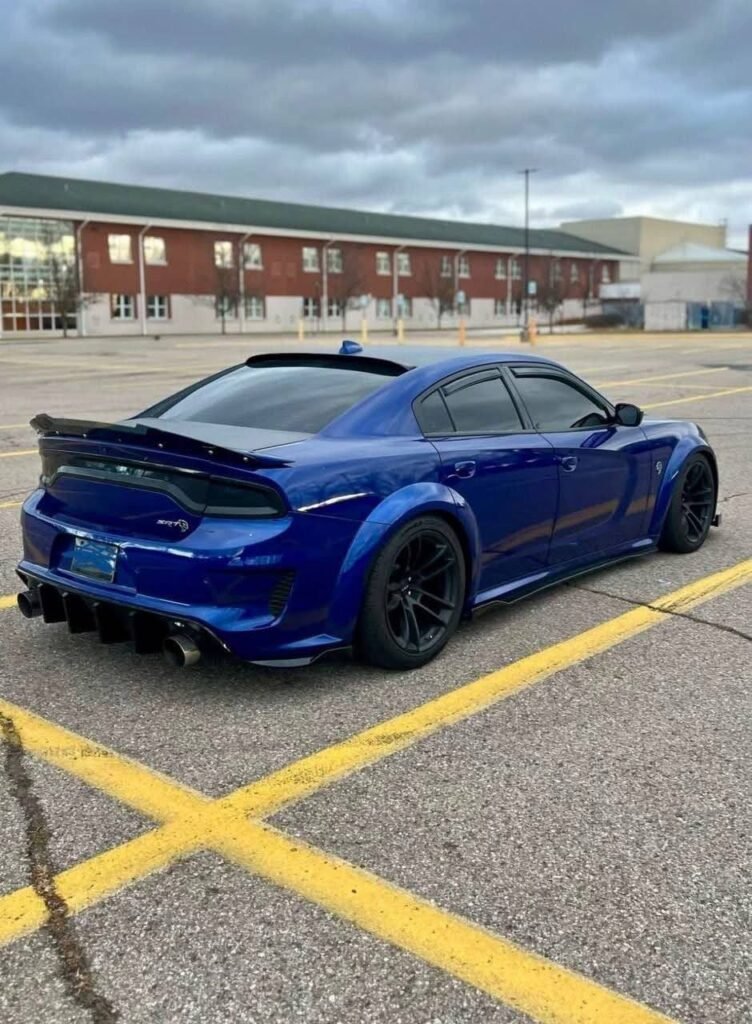
The 2016 Dodge Charger SRT Hellcat at $2,500 with 59,000 miles. 707hp.
The 2017 Hellcat Challenger at $2,500.
The Chevy Camaro Striker car at $2,800.
The 2023 Camaro SS at $3,000 with 27,000 miles.
The 2016 Camaro 2SS at $3,000 with 27,000 miles.
The 2025 Mercedes Benz C300 at $3,000 with 12,000 miles.
The 2021 BMW 530i at $3,000 with 29,000 miles.
The 2020 BMW M8 at $3,000.
The 2019 BMW M5 at $3,500.
See the full cheap no title cars page for the wider range.
Where Cheap Cars Come From
Same pipeline as everything else: insurance write-offs, salvage auctions, fleet disposals, repossessions, export stock.
At the cheap end, the mix skews toward:
- Older write-offs with cosmetic damage
- High-mileage fleet cars
- Repossessions
- Cars where repair cost exceeded value — which is why they’re cheap
That last one matters. A car written off because a $4,000 repair exceeded a $5,000 value is a different proposition to one written off for structural damage. Always ask what the original damage was.
The Cheap Car Traps
Down here the traps are more common and more expensive relative to the price.
Rust. The number one killer. Sills, floors, arches, subframes. On a $3,000 car, structural rust is often terminal.
Frame damage. A bent shell drives badly forever. See frame damage detection.
Flood damage. Cheap because it’s been cleaned. Electrics fail for years. Check for damp smell, fogged lights, corroded connectors, silt in the spare wheel well.
Clocked odometers. Cheap cars get clocked more than expensive ones. Compare wear to mileage.
Missing parts. Some cars arrive without a wheel, a seat or a catalytic converter. Confirm what’s included.
Electrical faults. Cheap cars with complex electrics are a money pit.
Bad paint over rust. Fresh paint on a $2,000 car is a warning, not a selling point.
No VIN. A cheap car without a VIN is a project. See how to title an untitled car.
What to Check on a Sub-$5,000 Car
Shorter than the full checklist, because at this level you’re deciding fast.
- VIN — decode it and run the stolen check. Two minutes.
- Rust — sills, floors, arches, subframe. Get underneath.
- Structure — panel gaps, weld quality, paint mismatch.
- Engine — cold start, listen, look for smoke and leaks.
- Gearbox — does it shift?
- Brakes — do they work, is there meat on the pads?
- Tyres — matching, legal, any good?
- Electrics — every switch, window, light.
- Odometer plausibility — against wear.
- What’s missing.
Full version on the pre-purchase inspection checklist.
The VIN Checks — Never Skip, Even at $2,000
- Decode via the NHTSA VIN decoder
- Stolen check via NICB and INTERPOL
- History via NMVTIS
Full method on how to check if a car is stolen.
When Cheap Is a Bad Idea
When freight dominates. A $2,000 car with $1,800 freight is a 90% markup. On short routes that’s real. On a $5,000 car it’s 36%.
When parts are rare. A cheap Italian exotic with no parts supply is an ornament.
When it’s a non-runner and you can’t diagnose it.
When there’s no VIN.
When you need it as a daily immediately.
When the rust is structural.
When Cheap Is Brilliant
As a parts car. The parts often exceed the purchase price.
As a project. You’re stripping it anyway.
As a track car. Cosmetic condition barely matters.
As a first car. Cheap to buy, cheap to insure, cheap to replace.
As a flip. Buy cheap, fettle, sell.
When the mechanicals are strong and the body is rough. That’s the classic cheap-car sweet spot — buy the drivetrain, ignore the paint.
The Parts Floor
This is why cheap cars rarely lose everything.
Even if the car is unsaleable whole, it’s worth something in pieces: engine, gearbox, panels, interior, wheels, catalytic converters, ECUs.
On a $2,500 Hellcat, the engine alone is worth more than the car. That’s a genuine safety net and it’s why cheap performance cars are low-risk in a way cheap hatchbacks aren’t.
Running a Cheap Car — Honest Costs
The purchase price is not the cost of ownership.
Fuel. A 6.2 supercharged V8 drinks. The Charger R/T less so. A Lexus RC less still.
Servicing. HEMI and GM parts are cheap. BMW and Mercedes parts less so. Maserati parts expensive.
Tyres. Wide performance tyres cost more than the car in some cases.
Brakes. Big brakes on performance cars wear and cost.
Insurance. A V8 costs more than a hatchback.
Repairs. Budget 15–20% of the purchase price per year. On a $2,500 car, $375–$500.
DIY and Self-Maintenance
At this price point, DIY transforms the economics.
Oil, filters, brakes, fluids, plugs — all doable at home with basic tools on most of these cars. That’s the difference between a viable cheap car and a money pit.
Find a specialist independent for the rest, not a main dealer.
Insurance on a Cheap Car
Insure on the VIN. Comprehensive is often cheap in absolute terms because the car’s value is low — but check whether it’s worth it versus third party.
On a $2,500 Hellcat, comprehensive is worth having.
Registration — Cheaper Cars Are Easier
Small consolation, but true: bonded title costs scale with value. A $2,500 car needs a small bond. See how to get a title for a car without one.
Shipping Cheap Cars — The Freight Problem
The main constraint on cheap cars.
Solutions:
- RoRo for a single running car — cheapest method.
- Consolidate two or three cheap cars into one container and split the freight.
- Buy locally if freight dominates.
Freight doesn’t scale with value, so cheap cars are the one category where shipping can be the wrong call. See international car shipping.
Buying Multiple Cheap Cars
If you’re buying at the bottom, buy two or three. Freight per car collapses and the maths works.
Trade buyers do exactly this. See container striker cars.
Every Camaro We Have in Stock
Fourteen Camaros, every one a no-title striker car with an intact, checkable VIN. From $2,800.
The ZL1s — Seven Supercharged Monsters
The 2018 Camaro ZL1 1LE at $3,500 with 39,000 miles — 650hp and an extreme track package.
The 2013 Chevrolet Camaro ZL1 Coupe at $3,500 with 39,000 miles.
The 2023 Chevrolet Camaro ZL1 at $5,000 with just 17,000 miles.
The 2023 Chevrolet Camaro ZL1 Coupe 2D at $5,000 with 31,000 miles.
The 2021 Camaro ZL1 at $5,500 with 26,000 miles.
Plus two at $5,000 each: the 2022 ZL1 and the 2022 ZL1.
The SS and LT1 — The V8 Sweet Spot
The 2023 Camaro SS at $3,000 with 27,000 miles.
The 2023 Camaro SS at $5,500.
The 2016 Camaro 2SS at $3,000 with 27,000 miles.
The 2018 Camaro LT1 at $4,000 with 24,000 miles.
The 2022 Chevrolet Camaro LT1 Coupe at $5,000.
The RS and the Cheapest One
The 2022 Camaro RS at $5,000 with 21,000 miles.
And the cheapest car we have: the Chevy Camaro Striker car at $2,800.
Full write-up on cheap Camaro for sale.
Other Cheap Cars Worth a Look
Muscle: the 2020 Dodge Challenger SRT Hellcat at $4,500, the 2022 Dodge Challenger SRT Super Stock at $3,500. See cheap Hellcat for sale and cheap Dodge Charger for sale.
Luxury: the 2013 Rolls-Royce Ghost at $8,000. See luxury cars for sale under $10,000.
Trucks: the 2021 Dodge Ram at $6,000. See trucks & SUVs for sale.
Wider market at affordable striker cars and the full inventory.
Cheap Cars Without Titles — FAQ
How cheap are these cars?
From $2,000. Genuinely cheap means under $3,500.
Are cheap no-title cars any good?
Many are. Judge the mechanicals, not the paperwork or the paint.
What’s the best value band?
$2,500–$4,000 — that’s where real performance cars sit.
What should I check?
VIN, rust, structure, engine, gearbox, brakes, electrics. Ten minutes saves thousands.
Can I register a cheap no-title car?
Yes, via a bonded title or local route. It’s cheaper on a low-value car.
Can I insure one?
Yes, on the VIN.
Is freight worth it on a $2,000 car?
On a short route, marginally. Consolidate two or three and it works.
What’s the biggest risk?
Structural rust and undisclosed damage.
What’s the parts floor?
The value of the car in pieces, which on performance cars often exceeds the price.
What’s the deposit?
$1,000 in USDT or Bitcoin. See deposit wallets.
Do you ship worldwide?
Yes, to any port.
Sources
- Wikipedia — Salvage title
- Wikipedia — Bonded title
- NICB — VIN check
- NHTSA — VIN decoder
- INTERPOL — Vehicle crime
- NMVTIS — National Motor Vehicle Title Information System
Final Word
Cheap cars without titles are the best value in the market and the easiest place to get stung. Both are true at once.
The difference is ten minutes of checking: VIN, rust, structure, engine. Do that and a $2,500 Hellcat is one of the great buys available anywhere. Skip it and you’ve bought someone else’s problem.
Buy the drivetrain, ignore the paint, check the shell, and don’t let freight eat the saving.
The cheapest cars go first. They always do.
Full inventory → · Cheap no title cars → · Deposit wallets → · Contact